Views: 100 Author: Site Editor Publish Time: 2026-06-25 Origin: Site
ABA extrusion fundamentally shifts material economics on the factory floor. Manufacturers routinely use recycled resins or calcium carbonate in the core B-layer. Meanwhile, virgin A-layers preserve premium surface quality and critical printability. However, pushing these B-layer limits often triggers severe mechanical instability. Operators who neglect proper die head calibration quickly experience unacceptable scrap rates. These hidden complications create crippling production bottlenecks across your entire facility.
We built this systematic, evidence-based troubleshooting framework specifically for plant managers and extrusion engineers. You will learn to correctly diagnose the root causes behind common process failures. We show you practical adjustments to restore line efficiency quickly. Furthermore, we outline exactly how to evaluate your current hardware setup. You will know exactly when specialized maintenance or complete equipment upgrades become necessary to stay competitive.
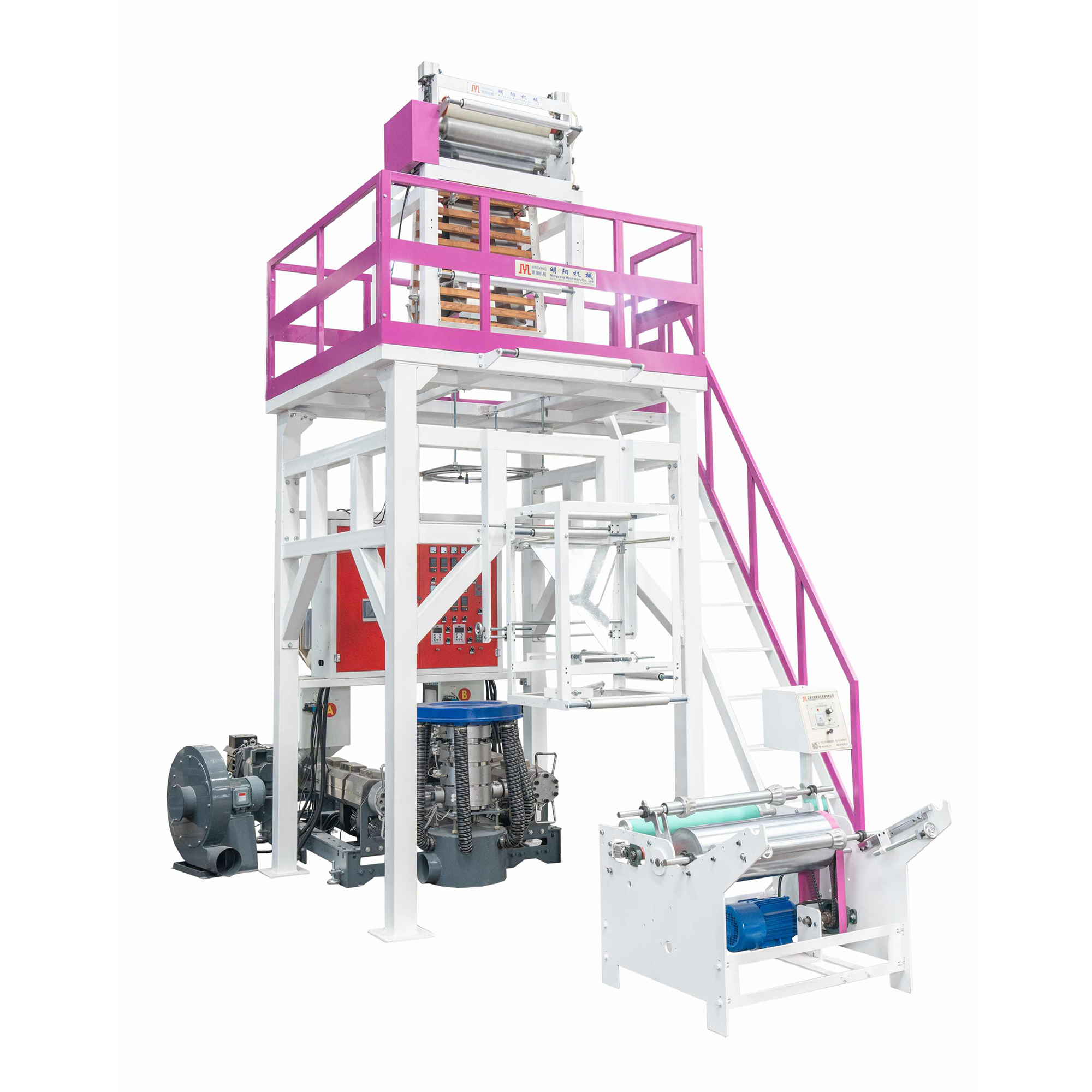
Most ABA film blowing machine problems stem from thermal mismatch between the A and B layers or improper die head centering.
Maximizing the B-layer ratio requires specialized screw designs and gravimetric dosing to prevent melt fracture and gauge variation.
Achieving stable blown film output relies on consistent ambient cooling (air ring calibration) and precise tension control.
Partnering with a vendor that provides responsive blown film technical service reduces Mean Time to Recovery (MTTR) during complex extrusion failures.
The primary allure of ABA co-extrusion lies in cheaper B-layer utilization. Yet, this aggressive cost-saving strategy backfires violently when machine instability strikes. High scrap rates easily negate any filler material savings. Uneven roll edges destroy downstream conversion processes. Operators often spend hours tweaking thermal parameters blindly. This trial-and-error approach wastes valuable production time and premium A-layer resins.
Healthy operations share very specific, measurable traits. You should see continuous operation hitting targeted kilogram-per-hour rates consistently. Excellent extrusion lines hold uniform film thickness within strict ±3-5% tolerances. They also produce flawless, tightly wound rolls. Good rolls never exhibit telescoping or edge curling. Reaching these targets requires strict mechanical discipline and excellent raw material control.
Persistent defects force a critical factory evaluation. Plant engineers must correctly distinguish between basic operator error, poor material formulation, and fundamental hardware limitations. Ignoring this crucial distinction leads to wasted diagnostic hours. We highly recommend standardizing your daily troubleshooting protocols. Consistent diagnosis routines isolate the root cause rapidly and prevent operators from making unnecessary mechanical adjustments.
Many operators face intense frustration when resolving ABA film blowing machine problems due to the hidden interplay of thermal layers. You must isolate specific visual symptoms to apply the correct mechanical fix.
Unstable bubbles disrupt the entire extrusion rhythm immediately. They ruin roll geometry and create severe tension spikes.
Symptom: The bubble breathes or pulsates visibly. It may collapse entirely without warning. Wrinkles form near the collapsing frame or pass directly through the nip rollers.
Root Causes: Uneven cooling ring airflow disrupts aerodynamic stability. Ambient factory cross-drafts shift the bubble off-center. Misaligned collapsing frames squeeze the film unevenly. Incorrect nip roller tension creates hard, permanent wrinkles.
Solutions: Calibrate the dual-lip air ring carefully. Isolate the entire extrusion area using physical draft shields. Verify nip roll parallelism using precision alignment gauges. Adjust the blower speed incrementally.
Visible Symptom | Primary Checkpoint | Immediate Action |
|---|---|---|
Rapid bubble breathing | Air ring blower stability | Clean air filters and verify inverter settings |
Diagonal hard wrinkles | Collapsing frame alignment | Realign wooden/carbon fiber slats evenly |
Horizontal nip wrinkles | Nip roller tension | Adjust pneumatic cylinder pressure on both sides |
Uneven film thickness creates massive headaches during downstream bag-making and printing operations.
Symptom: The film measures thicker on one specific side consistently. Telescoped rolls happen frequently at the winder. Downstream converting equipment suffers from weak side sealing.
Root Causes: Operators leave die gaps improperly adjusted during startup. Dirty die lips block melt flow partially. Inconsistent melt temperatures between the extruders alter local polymer viscosity.
Solutions: Perform hot-state die centering meticulously. Run regular purging compounds through the barrel. This clearing action removes carbonized buildup effectively. Verify all ceramic heater bands function properly using a handheld thermal camera.
Surface defects compromise the visual appeal and mechanical integrity of the final packaged product.
Symptom: You notice a rough "sharkskin" texture on the film surface. Unmelted gels populate the finished roll. Delamination occurs visibly between the A and B layers.
Root Causes: The B-layer contains excessive calcium carbonate (CaCO3). Low-grade regrind introduces harsh contamination. Incorrect extrusion temperatures shock the melt profile. Incompatible melt flow indexes (MFI) split the distinct layers.
Solutions: Optimize the A-to-B temperature profile progressively across both barrels. Adjust the MFI ratio of your blended resins carefully. Consider adding specialized polymer processing aids (PPA) to smooth the turbulent flow. Check the screen changer for ruptured mesh packs.
It remains highly tempting to over-pack the core B-layer with cheap fillers. However, strict physical limits dictate daily production reality. Pushing CaCO3 concentrations or using highly degraded recycled LDPE blends causes catastrophic tensile strength drops. The film becomes highly brittle. It tears easily during rapid tension changes on the winder.
You must deploy robust hardware to handle harsh, abrasive materials gracefully. Follow these critical steps to mitigate equipment risks:
Install a high-quality, continuous screen changer to catch un-melted contaminants immediately.
Utilize a specialized bi-metallic screw designed specifically to resist high-abrasion filler materials.
Monitor extruder motor load amps continuously to detect early signs of material surging.
Blend raw materials using automated gravimetric feeders rather than relying on manual volumetric mixing.
These proactive steps prevent premature barrel wear. They keep your production line running predictably and safeguard your mechanical investment.
Some manufacturers boldly claim their equipment handles 70% B-layer capacity. Real-world stable operation demands a much more conservative approach. Optimal mixing ratios depend entirely on specific resin quality and final mechanical requirements. Expecting flawless performance at absolute maximum filler capacities often leads to intense frustration. We recommend establishing baseline stability at 40% filler before scaling upward.
Chronic operational issues constantly plague older extrusion setups. You must define strict hardware requirements to achieve modern production standards. Investing in a high-output ABA film line fundamentally resolves older mechanical constraints.
Before signing a purchase order, evaluate your exact production bottlenecks. Do you struggle with speed, material mixing, or roll flatness? Modernize your facility by prioritizing specific technological upgrades that directly map to your desired production outcomes.
Gravimetric Dosing Systems: These smart units eliminate costly manual mixing errors completely. They ensure exact A-B-A layer ratios continually. Material waste drops significantly. You achieve better cost control immediately.
Internal Bubble Cooling (IBC): IBC systems increase production speeds dramatically. They secure stable blown film output by actively managing internal bubble heat. You cool the polymer from both the inside and outside simultaneously.
Oscillating Haul-off Units: These mechanical towers randomize minor gauge variations effortlessly across the web. You get perfectly flat, uniform rolls every time. They sit ready for high-speed flexographic printing without alignment issues.
Chart: Traditional vs. Modern ABA Film Line Capabilities | ||
Production Feature | Traditional Extrusion Line | Modern High-Output Line |
|---|---|---|
Resin Blending | Manual volumetric mixing (Prone to errors) | Automated gravimetric dosing (High precision) |
Cooling Mechanism | External air ring only | Dual-lip air ring + Internal Bubble Cooling (IBC) |
Roll Flatness | Fixed haul-off (Concentrates gauge bands) | 360° Oscillating haul-off (Disperses gauge bands) |
Throughput Limits | Constrained by thermal bottleneck | 30-50% higher output due to advanced cooling |
After-sales support dictates long-term commercial success in the plastics industry. You must weigh technical service capabilities heavily when shortlisting equipment partners. Machinery eventually breaks down or requires recalibration. When it does, you need rapid, competent intervention to prevent massive yield losses.
Search for responsive vendors offering remote PLC diagnostics. They can dial into your machine securely to fix software issues instantly. They should provide localized spare parts availability readily. Comprehensive operator training programs remain totally indispensable. Your staff needs proper education to run advanced multi-layer systems efficiently. Access to dedicated blown film technical service slashes downtime drastically.
Credible manufacturers do more than just sell machinery. They deliver ongoing process engineering support continuously. Clients frequently need help adapting to entirely new resin blends or sustainable biopolymers. Vendors must troubleshoot complex layer mixing issues alongside their buyers. This collaborative partnership ensures your extrusion line remains highly productive over its entire mechanical lifespan.
Resolving ABA extrusion defects demands precise mechanical calibration. It requires deep material science awareness and aggressive thermal management. You must balance these intricate variables carefully to maximize output quality. Proper die head adjustment and consistent air ring airflow remain non-negotiable foundations for success.
Audit your current factory scrap rates closely today. Document every instance of bubble instability, edge wrinkling, or gauge variation. Contact an experienced engineering specialist immediately. Evaluate whether dedicated maintenance adjustments or a complete machine retrofit makes the most practical sense for your daily operation.
A: Practical limits depend heavily on your end-product requirements. Most operations safely utilize between 40% and 60% recycled material. Specialized bi-metallic screw designs can push these boundaries slightly higher. However, pushing beyond 60% often degrades tensile strength significantly. Test your specific resin blends gradually to find the optimal balance.
A: You should inspect and clean the die head thoroughly every 3 to 6 months. High volumes of calcium carbonate accelerate severe carbon buildup on the die lips. Run high-quality purging compounds weekly to extend this maintenance interval safely. Always perform hot-state centering after completely reassembling the die.
A: Curling indicates a severe thermal or tension mismatch between the layers. The inner and outer A-layers likely experienced vastly different cooling rates. Check your internal bubble cooling (IBC) settings against the external air ring flow. Adjust extruder temperatures incrementally to equalize the polymer melt stress across all layers.