Views: 100 Author: Site Editor Publish Time: 2026-06-18 Origin: Site
Flexible packaging manufacturers face a relentless squeeze. They must navigate rising virgin resin costs while simultaneously meeting strict market demands for higher film durability. Traditional single-layer machines force a painful compromise. You either incorporate recycled materials and significantly sacrifice quality, or rely purely on virgin resin and sacrifice your profit margins.
The ABA co-extrusion model emerges as a highly strategic workaround. It cleverly separates the surface finish quality from the core film volume. Our article provides plant managers and investors an evidence-based breakdown of this extrusion technology. You will learn how cost-to-performance ratios stack up against traditional mono-layer setups and complex ABC alternatives. We present detailed operational insights, material integration strategies, and equipment evaluation criteria. This comprehensive guide helps you navigate capital equipment purchasing decisions confidently.
Cost Efficiency: ABA machines allow up to 50–70% of cheaper materials (CaCO3 or recycled pellets) in the middle layer without degrading surface finish.
Capital Optimization: Achieves a 3-layer film structure using only two extruders, reducing initial hardware investment and energy consumption compared to ABC machines.
Physical Superiority: Offers significantly higher tensile strength and puncture resistance than mono-layer films of the same thickness.
Best Use Cases: Highly profitable for high-volume, cost-sensitive products like T-shirt bags, courier envelopes, and garbage bags.
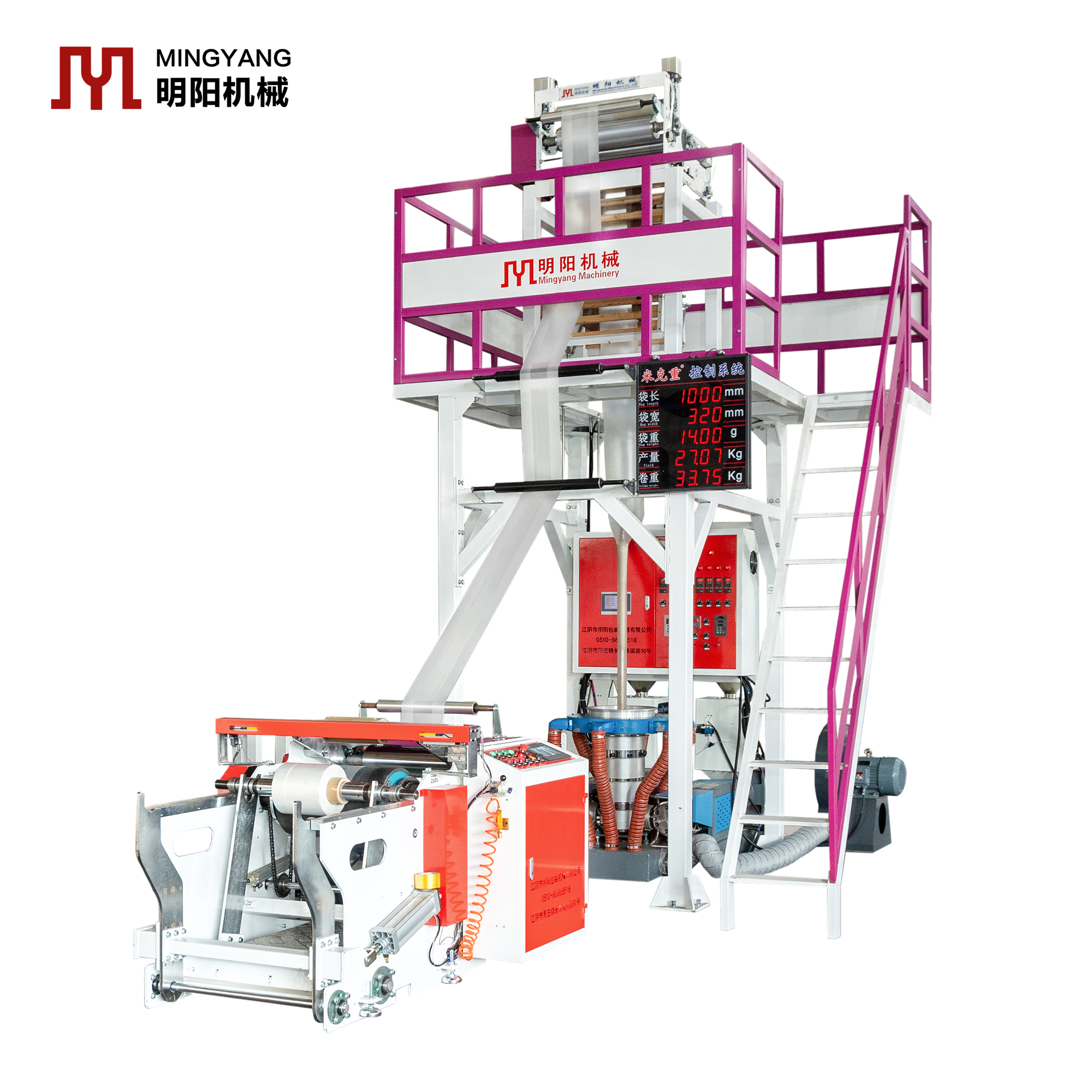
The fundamental architecture of a ABA co-extrusion film machine relies on a smart structural configuration. It produces a three-layer film using only two extruders. Industry professionals refer to these as Extruder A and Extruder B. Extruder A processes the material for both the outer and inner surface layers. Extruder B manages the central core. A specialized die head divides the flow from Extruder A, directing it to wrap entirely around the melt flow from Extruder B. This creates an A-B-A sandwich structure.
We position the "B" layer as the primary volume driver in this extrusion process. The middle layer acts as a containment zone. It effectively isolates bulky or inferior materials from the outer environment. Manufacturers commonly fill this central zone with post-industrial scrap, post-consumer recycled pellets, or calcium carbonate masterbatch. Because it remains entirely encased, the B layer does not interact with printing inks or sealing jaws during downstream processing.
Conversely, the "A" layer functions as the structural and aesthetic shield. You only need a thin coating of high-quality virgin LLDPE or LDPE here. This thin layer guarantees optimal printability, surface gloss, and vital sealing integrity. It masks the visual imperfections and textural roughness often associated with high-filler inner cores.
This streamlined approach creates distinct hardware efficiencies. You achieve three-layer capabilities without purchasing a three-extruder setup. This configuration dramatically lowers your initial capital expenditure. It also requires a significantly smaller factory footprint compared to a full ABC line. Maintenance tasks decrease because operators only monitor and clean two screws and barrels instead of three.
Material costs dominate the flexible packaging sector. They often represent the overwhelming majority of operational expenses. Transitioning to recycled-core film production fundamentally changes your financial math. You replace expensive virgin resin with post-consumer recycled (PCR) pellets or in-house plastic scrap in the B layer. This shift aggressively drives down the average cost per kilogram of your final product.
Calcium carbonate (CaCO3) integration plays a massive role in this cost reduction strategy. ABA equipment comfortably handles exceptionally high percentages of CaCO3 masterbatch. Operators routinely run recipes utilizing up to 70% calcium filler in the core layer. Calcium carbonate costs merely a fraction of virgin polymer prices. Injecting this heavy, inexpensive filler into the core drastically accelerates return on investment.
To understand the profit margin impact, we must examine the theoretical framework for material savings. A standard single-layer extrusion process typically restricts filler content to around 15-20% before film quality plummets. ABA technology completely removes this ceiling. By loading the core with 60% low-cost filler, and maintaining 20% virgin resin on the outer layers, the overall raw material blend becomes significantly cheaper.
We must maintain assumption transparency here. Actual savings will constantly fluctuate based on your specific operational environment. Your local electricity rates, current spot prices for virgin resin, and operator proficiency in recipe formulation all influence final margins. Poorly trained operators might waste material during setup, temporarily offsetting these savings. However, the fundamental cost advantage remains mathematically robust.
Theoretical Cost Reduction Chart: ABA vs Mono-layer Formulation | |||
Extrusion Setup | Surface Quality | Max Recycled/CaCO3 Load | Average Material Cost Impact |
|---|---|---|---|
Standard Mono-Layer | Degrades rapidly with filler | 15% - 20% | Baseline Cost |
ABA Co-Extrusion | Maintained via virgin A-layer | 50% - 70% (Core) | Significantly Reduced |
Evaluating physical performance reveals stark differences between these two technologies. Tensile strength and overall film toughness improve noticeably in a three-layer structure. The co-extrusion process creates a unique cross-directional stress distribution. This multi-layer bonding prevents the easy, straight-line tearing frequently observed in single-layer films loaded with calcium. The virgin outer layers act like structural reinforcement, holding the brittle inner core together.
Aesthetic and print quality comparisons further highlight ABA superiority. Mixing large volumes of recycled material in a single-layer machine inevitably causes surface roughness. Melt flow inconsistencies create visible gels and un-melted particles on the film exterior. These defects lead directly to severe print failures and poor ink adhesion. ABA technology brilliantly confines these cosmetic defects to the unseen central core. The outside remains smooth, glossy, and perfectly primed for high-resolution flexographic printing.
Operational stability is another critical evaluation metric. Extruding heavily filled resins creates high melt pressure. In a single-layer die, this extreme pressure often causes uneven material distribution and rapid equipment fatigue. ABA die heads mitigate this risk. They distribute heat and material flow more evenly across the multi-channel spiral structure. This balanced internal pressure prevents localized overheating and ensures consistent cooling efficiency at the air ring.
Performance Comparison Table: Machine Stability & Output | ||
Performance Metric | Mono-Layer Machine | ABA Co-Extrusion Machine |
|---|---|---|
Tensile Strength | Weakens with high filler | Retained via 3-layer structure |
Printability | Poor if using >20% recycled | Excellent (Virgin outer layers) |
Melt Pressure Control | Prone to spiking with heavy loads | Distributed evenly across die |
Cooling Efficiency | Standard | Optimized via multi-layer melt |
Our verdict presents a clear shortlisting logic for equipment buyers. If your final product utilizes more than 30% recycled content or mineral fillers, investing in a mono-layer setup is an obsolete choice. The physical degradation and cosmetic failures will ultimately cost you valuable client contracts.
Understanding product-market fit guarantees you extract maximum value from your equipment. Certain packaging segments align perfectly with ABA capabilities. We have categorized the most profitable applications below.
Trash and Waste Receptacles: The garbage bag film application stands out as the absolute perfect match for ABA setups. Trash bags require immense puncture resistance but demand the lowest possible production costs. Manufacturers rely heavily on post-consumer recycled plastic to meet these price points. The ABA structure hides the dark, inconsistent recycled resin inside the core while providing a smooth, strong exterior.
E-commerce & Courier Bags: Courier envelopes have strict opacity requirements. They must remain completely opaque to protect consumer privacy, usually featuring a black interior and a white or gray exterior. ABA easily handles high-pigment masterbatches in the core to block light cost-effectively. The pristine outer layer allows logistics companies to print high-contrast barcodes and branding seamlessly.
T-Shirt & Shopping Bags: Grocery bags require a delicate balance. They need high load-bearing capacity to prevent tearing, yet supermarkets demand rock-bottom pricing. By loading the core with calcium carbonate, manufacturers drop costs drastically while maintaining the structural integrity required to carry heavy consumer goods.
We must also establish clear boundaries for this technology. ABA is not a universal solution for all flexible packaging. You should choose an ABC configuration instead when manufacturing complex barrier films. Avoid ABA for sophisticated food lamination processes or specialized agricultural films. These advanced applications strictly require three entirely distinct resin layers. For example, a food film might need a structural layer, an EVOH barrier layer, and a specific heat-sealant layer. The shared A-layer in an ABA machine cannot meet these asymmetrical material requirements.
Purchasing heavy machinery requires rigorous technical diligence. Operators face specific implementation risks when pushing equipment to its limits. Buyers must evaluate machines based on strict engineering criteria to prevent premature hardware failures.
Screw and Barrel Wear: High calcium carbonate levels are incredibly abrasive. Over time, processing 60% filler will erode standard steel screws. Buyers must mandate bimetallic screws and specialized alloy treatments for the B-extruder. This hardened metallurgy significantly extends component lifespan under harsh processing conditions.
Die Head Precision: The core risk of co-extrusion involves uneven layer distribution. If the die head lacks precision, the thin 'A' layer may rupture or distribute unevenly. This exposes the rough core material. Highlight the absolute necessity of CNC-machined, high-precision spiral die heads during your vendor evaluation process.
Cooling Tower & Air Ring Specifications: Extruding multi-layer films with varying melt indexes requires advanced temperature management. You need robust dual-lip air rings and optimized internal bubble cooling (IBC) systems. Proper cooling prevents film blocking, a frustrating defect where the warm plastic tube fuses to itself during winding.
Energy Consumption (OpEx): Heavy filler processing demands substantial motor torque and precise barrel heating. Assess motor types carefully. Insist on high-efficiency, inverter-driven motors and premium heating zone insulation. You must ensure the money saved on raw materials isn't immediately lost to soaring electric bills.
Moving from a single-layer operation to co-extrusion represents a significant operational pivot. Management teams should follow a structured decision framework before signing purchase orders. You start by conducting a ruthless current production audit. Ask your sales team if you currently reject client orders due to uncompetitive pricing. Ask your floor managers if mono-layer machines are consistently failing quality checks when running cheaper, highly contaminated resins. If the answer to both is yes, your operation is practically begging for a technological upgrade.
Next, you must engage in payback period modeling. Calculate the machine cost delta. This means subtracting the price of a standard mono-layer machine from the quoted price of an ABA machine. Take that initial CapEx difference and divide it by your projected monthly material savings. Because the material savings per ton are so dramatic, most high-volume producers discover the payback period for the extra extruder is shockingly short.
Your final next steps as a buyer involve verifying equipment capability. Request custom sample film runs using your exact proprietary material blends. Verify supplier case studies to confirm their machines survive long-term abrasive wear. Most importantly, audit the manufacturer’s aftermarket support network. Maintaining complex co-extrusion die heads requires specialized engineering support. Ensure your chosen vendor provides accessible, rapid-response technical service.
The ABA film blowing machine advantages are not theoretical marketing concepts. They represent practical, margin-saving realities for specific, high-volume sectors of the flexible packaging industry. By intelligently masking cheap, bulky materials within a structural core, this technology fundamentally rewrites the cost-per-kilogram equation.
For manufacturers focused on consumer shopping bags, courier packaging, and industrial trash liners, transitioning from single-layer equipment is no longer optional. It is a necessary operational evolution required to remain competitive in a fiercely price-sensitive market. Sticking with mono-layer machines for these applications guarantees shrinking margins over time.
We strongly recommend taking immediate action. Consult with a qualified extrusion engineer today. Request a customized material calculation based on your specific daily output and local resin costs. Understanding your precise potential savings is the first critical step toward transforming your production floor.
A: An ABA setup requires a higher upfront capital investment due to the second extruder, separate drive motors, and a complex co-extrusion die head. However, buyers typically recover this premium rapidly. The short ROI timeline is driven entirely by the massive monthly material savings achieved by loading the core with inexpensive fillers and recycled resins.
A: Yes, you absolutely can. While engineers designed the machine specifically for cost-saving core mixing, it handles virgin resin perfectly. Running 100% virgin materials through an ABA configuration simply yields an incredibly strong, premium three-layer film with exceptional cross-directional strength and pristine optical clarity.
A: There is a moderate learning curve. Operators must learn to manage two distinct temperature zones, coordinate dual extrusion speeds, and adjust precise layer ratios. Reliable PLC control systems make this transition smoother. Proper initial vendor training ensures operators quickly master the nuanced melt pressure management required for stable multi-layer production.