Views: 100 Author: Site Editor Publish Time: 2026-06-29 Origin: Site
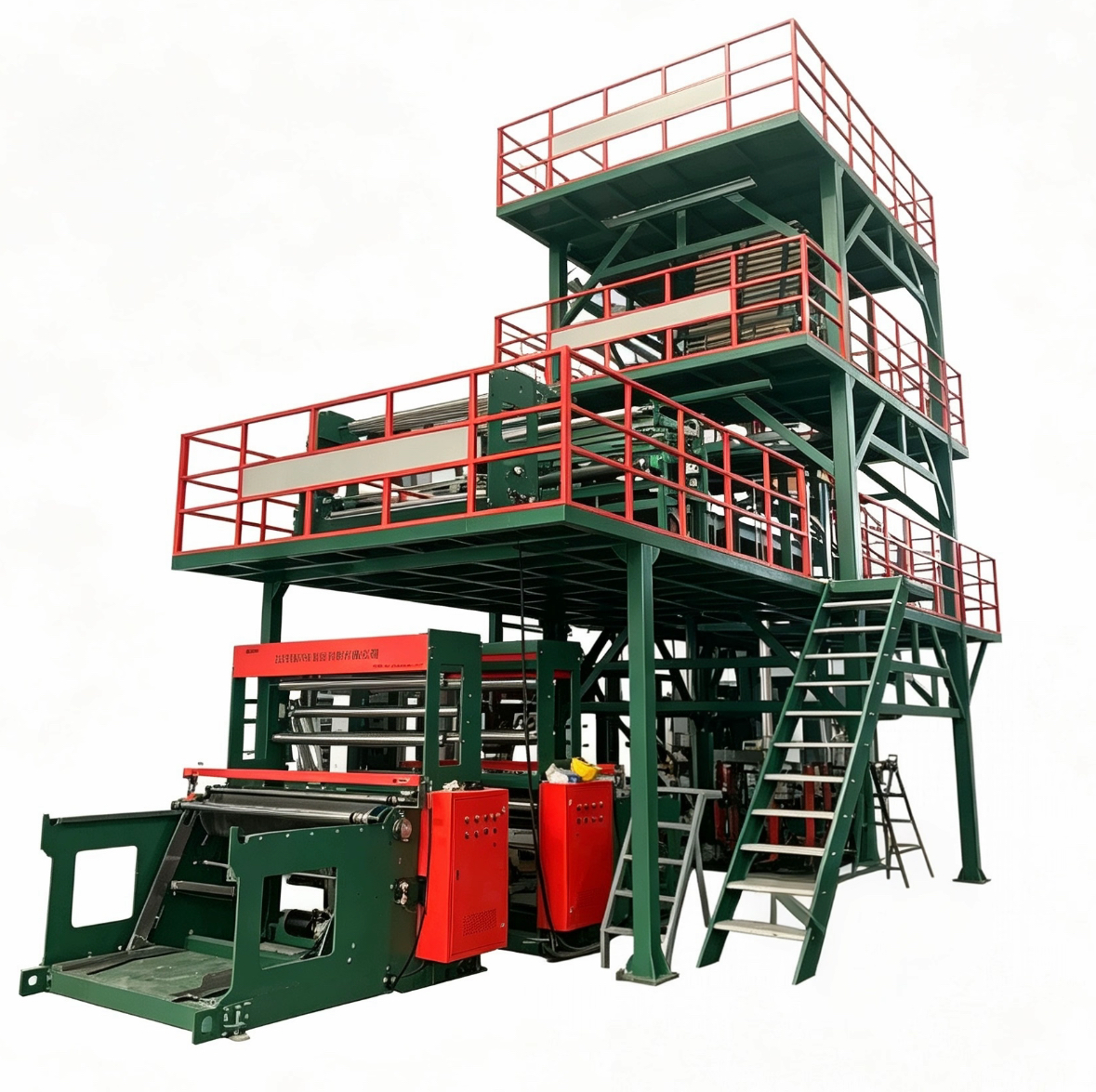
Food packaging leaves absolutely no room for equipment inconsistency. Barrier properties, shelf-life extension, and strict compliance demand perfection in every single production run. Manufacturers must rely on flawless film structures to protect sensitive products from spoilage and contamination. Upgrading your facility or establishing a new line requires a deliberate shift in strategy. You must move away from generic extrusion systems and focus heavily on specialized, multi-layer architecture. This transition ensures your production meets modern market expectations while minimizing material waste. Selecting the right ABC blown film machine requires evaluating extrusion precision, material versatility, and long-term operational efficiency rather than just upfront capital expenditure. By understanding core machine components, you will master the art of matching equipment capabilities with your specific output demands. This guide details exactly how to navigate equipment specifications, avoid critical procurement mistakes, and secure a system built for continuous reliability.
ABC co-extrusion is mandatory for functional food packaging requiring specific barrier, structural, and sealing layers.
Evaluating die head precision and cooling system efficiency is critical to minimizing resin waste and ensuring uniform film gauge.
Buyers must prioritize material compatibility (e.g., EVOH, Nylon, mLLDPE) to meet stringent food safety and shelf-life standards.
A reliable blown film customization service bridges the gap between standard machine specs and facility-specific production targets.
Single-layer and ABA machines cannot meet the distinct functional requirements of complex food packaging. They fail when specialized applications like vacuum pouches, barrier films, or lamination substrates arise. You cannot achieve diverse physical traits with a single melt stream. Food packaging requires distinct surface tensions, oxygen barriers, and heat-sealing properties. Attempting to blend these resins in a single-layer machine compromises the final product. It often destroys both the sealing integrity and the barrier performance.
We use ABC architecture to solve these complex engineering challenges. It utilizes three independent extruders. You can tailor each layer precisely to its required function.
Layer A (Inner): This serves as the sealing layer. It touches the food directly. You must use heat-sealable, safe materials. Metallocene PE (mLLDPE) or LDPE works best here to ensure hermetic seals at lower temperatures.
Layer B (Core): This layer provides structural integrity and puncture resistance. It frequently houses critical barrier resins. You might use Nylon for mechanical strength. You could use EVOH to stop oxygen ingress. Tie layers are often injected here to bond dissimilar materials together securely.
Layer C (Outer): This acts as the presentation layer. It requires excellent printability and high gloss. It must also resist heat during the downstream sealing process to prevent the jaws from sticking to the film.
An ABC co-extrusion film line gives you total formulation control. Manufacturers can independently adjust the resin blend for each zone. You control the exact thickness of every individual layer. This optimizes packaging performance while aggressively minimizing expensive raw material costs.
Layer Configuration | Primary Function | Common Materials Used | Key Performance Indicator |
|---|---|---|---|
Layer A (Inner) | Food contact & heat sealing | mLLDPE, LDPE, EVA | Seal strength, low initiation temperature |
Layer B (Core) | Barrier protection & rigidity | Nylon, EVOH, HDPE, Tie-resins | Oxygen transmission rate, puncture resistance |
Layer C (Outer) | Printing & heat resistance | LLDPE, HDPE, PP | Surface tension (Dynes), gloss, stiffness |
You must evaluate core machine components meticulously before finalizing any purchase. Subpar mechanical parts will sabotage the best resin formulations.
The heart of the machine lies in its extrusion capabilities. You must assess the L/D (Length to Diameter) ratios carefully.
Prioritize 30:1 or 32:1 Ratios: Longer screws provide superior melt homogenization. This matters deeply when processing distinct resins simultaneously. Short screws fail to melt barrier resins consistently.
Demand Bimetallic Screws: Evaluate bimetallic screws for long-term longevity. Abrasive additives and high-temperature resins degrade standard steel screws rapidly. Bimetallic options withstand harsh, continuous operating conditions.
You must look for absolute concentricity control. Advanced spiral mandrel designs are essential for multi-layer applications. They eliminate weld lines that weaken the final packaging.
Assumption to challenge: A cheaper die head saves money on the initial purchase.
Reality: Poor layer distribution results in high gauge variation. This leads to massive resin waste immediately. You will face rejected film rolls and unhappy clients over time. Precision die heads ensure uniform distribution, saving thousands in material costs annually.
Evaluate Internal Bubble Cooling (IBC) systems. IBC cools the bubble from the inside out. This speeds up production by up to 30%. Combine this with dual-lip air rings for increased output and exceptional optical clarity.
Assess tension control mechanisms on the winders. Choose carefully between surface winders and center/surface winders. Improper tension causes film stretching. It can also cause severe telescoping on the roll. These specific defects ruin post-processing steps like high-speed printing and slitting.
Food standards demand absolute precision. Your equipment must handle complex chemical formulations without error.
Food packaging requires blending standard polyolefins with highly specialized barrier resins. Evaluate the machine's ability to handle wildly different melt flow indexes (MFI). If the MFI mismatch between layers is too high, interfacial instability occurs. This creates unacceptable wavy patterns inside the film. The equipment must process varying temperatures simultaneously. It should do this without degrading heat-sensitive materials. EVOH, for instance, requires precise thermal control to prevent burning and gel formation.
These systems are essential for precise resin blending. Consider gravimetric dosing a strict, non-negotiable feature.
It controls your expensive formulation costs accurately.
It ensures consistent layer ratios across every shift.
It allows for precise structural configurations like 1:2:1 or 1:1:1 without manual guesswork.
Food safety compliance demands rigorous production documentation. Look for advanced PLC (Programmable Logic Controller) systems. They log vital extrusion parameters automatically. The system should record zone temperatures, melt pressures, and line speeds in real-time. This historical data supports FDA and CE compliance audits directly. It ensures reliable quality control tracking in food packaging film production. If a batch is ever questioned, your PLC data proves your extrusion process met all safety limits.
Standardized machines rarely fit specialized workflows perfectly. You must match the equipment dimensions to your actual operational reality.
Define success by "maximum stable output." Do not focus solely on "maximum mechanical speed." High line speeds mean nothing if the bubble destabilizes or the film wrinkles. Calculate realistic yield volumes carefully. Base these calculations strictly on your targeted film widths and specific thicknesses.
Examine your production environment before signing any contract. Consider your tower height limitations first. A 3-layer line requires a significantly taller tower to cool the film properly before nipping. If you nip the film while it is too hot, the inner layers will block and stick together permanently. Assess your local power grid stability. Evaluate the available floor space for the entire footprint, including the winders and silos.
Highlight the necessity of engaging a vendor's blown film customization service. Customization bridges the gap between basic catalog specs and your facility-specific targets.
Common areas to customize:
Specialized haul-off units designed for highly sticky lamination films.
In-line edge trim recycling systems to feed waste straight back into the core layer, reducing raw material usage.
Corona treatment integration to prepare the outer layer for downstream printing adhesion.
Understanding machine architecture prevents catastrophic investment errors. Many buyers fall into the trap of confusing these two distinct systems.
Many vendors market ABA machines aggressively. They position them as a cheaper 3-layer alternative to ABC lines. This causes significant confusion for procurement teams looking to cut initial costs.
Clarify the mechanical difference immediately. ABA machines use only two extruders. Extruder A feeds both the inner and outer layers simultaneously. Extruder B feeds the core layer. You cannot separate the chemical formulations of the outer skins. They must remain identical.
ABA works excellently for T-shirt bags or shipping sacks. Manufacturers use cheap fillers like calcium carbonate or recycled material in the core to save money. However, ABA fails completely in functional food packaging. The inner sealing layer must differ entirely from the outer printing layer. You need a low-temperature, food-safe sealant inside. You need a high-temperature, printable surface outside. Buying an ABA system for complex food applications represents a fatal limitation. It restricts your product portfolio permanently.
Feature | ABC Architecture | ABA Architecture |
|---|---|---|
Number of Extruders | Three independent extruders | Two extruders (A feeds inner/outer) |
Layer Independence | 100% independent formulations | Inner and outer layers must be identical |
Ideal Applications | Food packaging, barrier films, lamination | Grocery bags, trash bags, courier bags |
Food Safety Compliance | High (can isolate food-contact layer) | Low (outer handling layer matches inner layer) |
Evaluating long-term efficiency protects your profit margins. A machine that wastes energy or requires constant maintenance will drain your resources rapidly.
Film blowing is a highly energy-intensive process. You must evaluate the inclusion of energy-saving motors actively. Look for high-efficiency drive systems across the entire line. Insulated barrel heaters reduce thermal loss dramatically, lowering your daily power draw. Regenerative drives on the winders can capture and reuse braking energy efficiently.
Commissioning a co-extrusion line requires skilled, precise tuning. Assess the vendor's installation support thoroughly. Review their operator training programs. Co-extrusion operators need specialized knowledge to manage multiple melt streams. Check local parts availability. Waiting weeks for a proprietary die component causes unacceptable production downtime.
Filter your vendors using strict, evidence-based criteria. Demand verifiable case studies in food packaging specifically. General plastics experience is not enough. The vendor must understand sensitive barrier resins and strict hygiene standards.
Best Practice: Require a factory acceptance test (FAT). Run your exact resin formulations during this test. Vendor test resins are often optimized for easy running. Your actual EVOH or metallocene might behave differently. Do not sign off until the machine proves its stability with your proprietary recipes.
Selecting an equipment platform is an exercise in balancing precise material science with rugged mechanical reliability. You must align your structural demands with the exact technical capabilities of the hardware. Do not compromise on die head quality or gravimetric dosing. Strict food packaging compliance relies entirely on these components functioning flawlessly. Precision engineering reduces waste, ensures safety, and protects your brand reputation in the market. As a clear next step, compile your specific film recipes today. List all required resins, target widths, and precise layer thicknesses. Request a customized operational efficiency calculation from your shortlisted equipment manufacturers to ensure long-term viability.
A: It varies by application, but common configurations include 1:1:1 for balanced mechanical strength. Alternatively, you might use 1:2:1 or 1:3:1 when maximizing a cheaper core layer or utilizing a specific, highly concentrated barrier resin like EVOH in the center.
A: Yes. An ABC machine offers incredible flexibility. You can run the exact same resin in all three extruders to simulate a single-layer film. You can also run identical resins in extruders A and C to simulate an ABA structure, making the machine highly versatile for varying orders.
A: Standard lead times range from 3 to 6 months for the manufacturing phase. After delivery, expect an additional 2 to 4 weeks for precise mechanical installation, FAT (Factory Acceptance Testing), and comprehensive on-site operator training.