Views: 0 Author: Site Editor Publish Time: 2026-08-14 Origin: Site
Plastics manufacturing requires heavy capital expenditure. Choosing the wrong extrusion equipment leads to chronic gauge variation, excessive scrap rates, and eroded profit margins. The core problem lies in the gap between manufacturer spec sheets and actual shop-floor realities. Buyers often fall into the trap of purchasing based on instantaneous maximum capacity rather than sustainable, saleable output. When you run a plant, theoretical peaks mean nothing if the bubble drops every two hours. This guide provides a systematic, engineering-focused evaluation framework. You will learn how to assess mechanical components accurately, validate performance claims, and vet manufacturers thoroughly before signing a purchase order. We focus on practical metrics that dictate daily operations. You need equipment that holds tolerances shift after shift, handles your specific resin blends, and keeps operators safe. Let's break down exactly what to look for on the factory floor.
Prioritize Stable Output Over Maximum Capacity: A machine's value is dictated by its "rated stable capacity" under continuous operation, not its theoretical peak output.
Component Synergy Dictates Film Quality: The extruder screw, die head, and cooling ring must be perfectly matched to your specific resin blends to ensure bubble stability and uniform thickness.
Automation Reduces Giveaway: Investing in integrated thickness gauges and automated tension control directly impacts the bottom line by reducing gauge giveaway and preventing roll defects.
Rigorous Vendor Vetting is Non-Negotiable: A comprehensive Factory Acceptance Test (FAT) and guaranteed after-sales support from the film blowing machine manufacturer mitigate long-term operational risks.
Extrusion capabilities must match specific polymers perfectly. Different resins behave differently under heat and pressure. LDPE, LLDPE, HDPE, and biodegradable blends require distinct processing parameters. Melt flow index (MFI) and resin density directly dictate the required screw design for a PE film blowing machine. Processing fractional melt resins demands specific shear and mixing zones to prevent melt fracture. High-MFI materials flow easier but require careful temperature regulation to maintain bubble stability. You must communicate your exact resin formulations to the equipment builder. Generic screw designs often fail to homogenize complex blends. This leads to un-melted gels, fish-eyes, and weak film strength. When running metallocene LLDPE, you need a motor and gearbox combination that can handle the higher torque requirements. Standard LDPE screws will shear metallocene too aggressively, degrading the polymer chains. Always specify your exact blend percentages, including masterbatch and regrind ratios.
Establish your baseline dimensional requirements early in the planning phase. Define your target film width and thickness range in microns. Determine the necessary layer structure for your market. Mono-layer setups work well for simple agricultural films, construction sheeting, or basic trash bags. Co-extrusion lines handle complex barrier requirements for food packaging or lamination films. Map machine specifications directly to the final product. Configuring a packaging film machine for high-clarity applications demands precise temperature control and specialized die geometries. High-barrier applications require specific layer ratios to ensure oxygen and moisture transmission rates meet customer specs. You must ensure the die gap and collapsing frame accommodate your maximum lay-flat width. Consider the blow-up ratio (BUR). A machine designed for a 2.5 BUR might struggle to produce stable film at a 1.5 BUR. Match the die diameter to your target lay-flat width to maintain optimal mechanical properties in the transverse and machine directions.
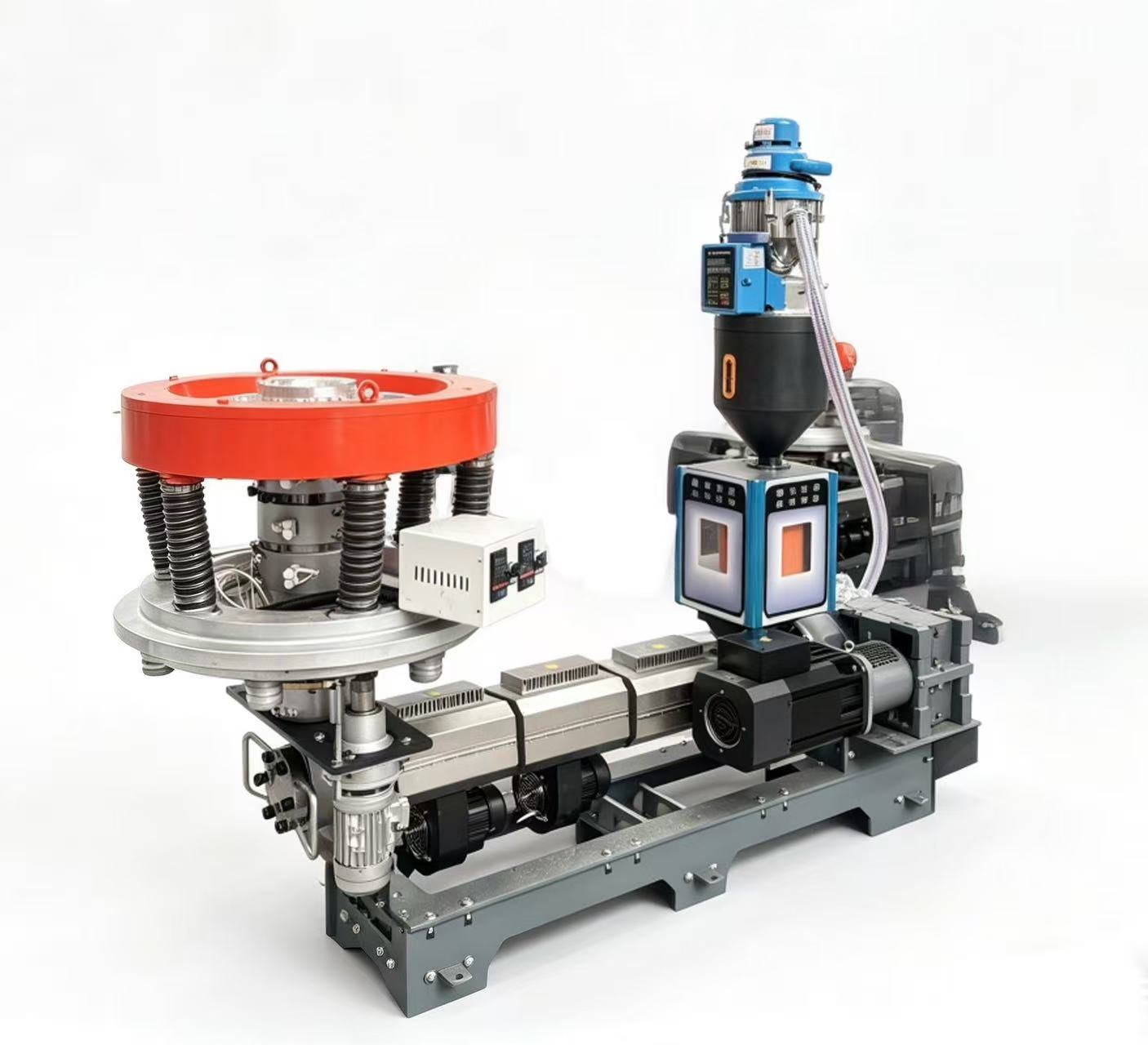
Evaluate equipment scale carefully before committing capital. A mini-type blown film machine serves as a strategic entry point. It helps beginners mitigate upfront financial risk while learning the extrusion process. Established plants also use compact systems effectively. They deploy them for dedicated R&D testing, color matching, and small-batch specialty runs. Contrast the ROI timeline and operational footprint. Compact systems offer agility and faster changeovers. They consume less power and generate less startup waste. High-output, multi-layer industrial lines dominate high-volume commodity markets. However, they require massive infrastructure, tall cooling towers, and longer continuous runs to achieve profitability. A mini line might produce 30 to 50 kg/hr, fitting under a standard 4-meter ceiling. An industrial line pushing 400 kg/hr requires a 12-meter tower and heavy-duty floor reinforcement. Match the machine size to your actual order volumes, not your aspirational sales goals.
Evaluate Length-to-Diameter (L/D) ratios carefully during your inspection. Higher L/D ratios generally improve melt homogeneity. They also increase overall output rates. A 30:1 or 32:1 ratio provides better mixing and a more stable melt temperature than an older 24:1 ratio. Specialized screw geometries handle complex polymer blends efficiently. Barrier screws separate melted and un-melted polymers, ensuring only fully plasticized material reaches the die. Mixing sections process recycled materials without degrading the polymer chains. Proper screw design prevents un-melted gels from reaching the die head. It ensures a consistent melt temperature profile across the entire output range. Ask vendors about their barrel cooling mechanisms. Grooved feed throats improve solids conveying significantly, pushing more material per revolution. However, they require robust water cooling jackets to prevent premature melting in the feed zone. Inspect the gearbox rating. An undersized gearbox will overheat and fail prematurely when pushing high-viscosity resins at maximum RPM.
The die head dictates extrusion success. It prevents flow lines, weld marks, and gauge bands. It ensures uniform melt distribution across the entire bubble. Assess cooling technologies thoroughly. Dual-lip air rings provide external bubble stability, locking the frost line in place. Internal Bubble Cooling (IBC) systems exchange hot internal air for chilled air. Cooling capacity directly correlates to bubble stability. It dictates your ultimate production bottlenecks. If you cannot cool the bubble fast enough, you cannot run the extruder faster, regardless of motor size. Precision engineering in the spiral mandrel die dictates final film quality. Inspect the die for ease of concentricity adjustments. Operators need accessible adjustment bolts to center the die gap quickly. Look for die heads machined from high-grade forged steel with polished flow channels. Rough flow channels cause polymer hang-up, leading to degraded material and black specks in the film.
Analyze winder configurations based on your film's specific elasticity. Surface winders suit standard commodity films well, relying on friction to drive the roll. Center winding handles delicate or stretchable webs better by driving the core directly. Gap winding prevents damage to highly tacky films by maintaining a precise distance between the lay-on roller and the winding roll. Closed-loop tension control is absolutely mandatory. It prevents telescoping during roll changeovers. It stops starring or crushed cores. Precision tension keeps the web flat and wrinkle-free as it travels through the nip rollers. Look for automated roll changeover capabilities. Flying knife systems reduce scrap during high-speed transitions. The winder ultimately determines the visual quality of the finished roll. A poorly wound roll will cause massive problems on downstream printing presses or bag-making machines. Inspect the load cells and dancer rollers. They must provide real-time feedback to the winder drives to adjust speeds instantly.
Assess the integration of auxiliary equipment carefully. Gravimetric blenders ensure accurate dosing of masterbatch. They mix additives and virgin resin perfectly by weight, eliminating manual mixing errors. Automated resin drying systems remove moisture before extrusion. Preventing moisture in the material handling system is a mandatory troubleshooting step. Mitigating water condensation avoids bubble instability. It prevents visual film defects like lensing, voids, or gels. Vacuum loaders keep the hopper full automatically, preventing dry-runs. Screen changers filter out contaminants from recycled resins. Continuous screen changers prevent line stoppages during filter swaps, maintaining steady melt pressure. These auxiliary systems keep the main extruder running smoothly. Check the dew point capabilities of the desiccant dryers. Processing hygroscopic materials like nylon or EVOH in a co-extrusion setup requires dew points below -40 degrees Celsius.
Question manufacturer output claims rigorously. Define the exact operating conditions required to achieve stated capacities. Calculate true ROI based on saleable pounds per hour. Ignore theoretical maximums printed on glossy brochures. Identify true production bottlenecks on the shop floor. Cooling limits often restrict output long before drive limits do. A machine running stably at 80% capacity yields more profit. It produces less scrap than one running erratically at 100%. Demand proof of continuous output stability. The equipment must hold gauge and bubble shape for hours, not just minutes. Ask the vendor for the specific output rate guaranteed when running your exact resin blend at your target micron thickness. A machine might hit 200 kg/hr on a thick 100-micron film but drop to 120 kg/hr when running a thin 20-micron film due to cooling limitations.
Evaluate the integration of an automatic thickness gauge. Capacitance or nuclear sensors maintain uniform thickness across the web. Discuss acceptable tolerance levels for gauge variation. Tighter tolerances reduce material giveaway significantly. Less giveaway increases your saleable yield per resin batch. Consistent gauge also improves downstream converting processes. Printing presses and bag-making machines jam less often when fed flat, uniform rolls. Automated profile control adjusts the air ring or die automatically. This removes human error from the thickness equation. It ensures every roll meets strict customer specifications. Manual gauge control often results in ±10% variation. A high-quality auto-profile air ring can bring that down to ±3% or better. Calculate the resin savings over a year. The payback period for an automatic gauge control system is often less than twelve months for high-volume operations.
Identify energy-intensive components immediately. Heaters and main drive motors consume the most power. Evaluate the inclusion of energy-efficient drives. Permanent magnet synchronous motors reduce electrical draw significantly compared to standard AC motors. Establish baseline OEE expectations for your facility. Factor in average setup times and changeover waste. Account for routine maintenance downtime. High OEE depends on reliable mechanical design. Accessible maintenance points reduce repair times. Insulated heater bands prevent heat loss into the plant environment, saving power and keeping the factory floor cooler. Efficient power usage directly lowers your variable manufacturing costs. Track the specific energy consumption. This metric tells you exactly how much power you use to produce one kilogram of saleable film. Compare this metric across different machine proposals to find the most efficient design.
Performance Metrics: Spec Sheet vs. Shop Floor Reality | |||
Metric Category | Manufacturer Spec Sheet Claim | Shop Floor Reality Check | Actionable Evaluation Step |
|---|---|---|---|
Output Capacity | Instantaneous Maximum (e.g., 200 kg/hr) | Rated Stable Capacity (e.g., 160 kg/hr) | Test continuous run for 8 hours during FAT using your exact resin. |
Thickness Tolerance | ±3% under ideal lab conditions | ±5% to ±8% depending on ambient drafts | Verify gauge variation with capacitance sensors during the test run. |
Energy Usage | Optimal kW/hr at steady state | Higher draw during startup, heating, and frequent changeovers | Check motor efficiency ratings and specify insulated ceramic heater bands. |
Changeover Time | 15 minutes (theoretical) | 45+ minutes including purging, die cleaning, and web threading | Time a full resin and size changeover in person on the vendor floor. |
Scrap Rate | Less than 2% | 5% to 10% due to manual threading and poor tension control | Evaluate the winder's flying knife and automated roll change reliability. |
Review options for in-line processing carefully. Integrating printing and gusseting streamlines the entire film production line. In-line slitting and corona treatment prepare the film for immediate converting. Assess the machine's PLC and HMI interface. Look for robust data logging and recipe management features. Seamless integration with plant-wide ERP systems enables real-time production tracking. Remote troubleshooting capabilities allow vendor technicians to diagnose software issues instantly over a secure connection. Automation reduces reliance on highly skilled manual operators. It ensures repeatable quality across different shifts and production runs. Check the brand of the automation components. Standardized components from brands like Siemens or Allen-Bradley ensure you can find replacement parts locally. Proprietary control boards lock you into the manufacturer for expensive replacements and long lead times.
Address the physical realities of installation early. Measure tower height requirements against your facility ceiling. Verify floor loading capacities for heavy extruders and winders. Ambient climate control requirements matter greatly for extrusion. Optimal cooling depends on stable plant temperatures. High humidity levels cause condensation on air rings and IBC sensors. Drafty plant floors disrupt external bubble stability, causing gauge bands. Ensure your chilled water system can handle the heat load from the grooved feed throat and gearbox heat exchangers. Plan adequate space for resin staging and finished roll removal. Proper layout prevents material handling bottlenecks later. Leave enough clearance around the die head for operators to perform maintenance safely. A cramped installation leads to neglected maintenance and increased safety hazards.
Outline mandatory steps for a successful FAT. Run your exact resin formulation during the test. Test the equipment at continuous stable capacity for several hours. Verify gauge tolerances before authorizing shipment. A rigorous FAT exposes mechanical flaws early. It catches software bugs while the machine still sits on the vendor's floor. Check heat-up times and screen change procedures. Measure the exact scrap rate generated during startup. Do not accept simulated tests using generic resins. Demand real-world operating conditions. Bring your own operators to the FAT. Let them thread the web, change the screen pack, and perform a roll change. If your operators struggle to run the machine in the vendor's pristine facility, they will fail on your busy shop floor. Document every parameter during the FAT for your baseline records.
Evaluate the manufacturer's domestic service presence. Guaranteed response times keep your plant running smoothly. Check the availability of critical wear parts. Screws, barrels, and heater bands must ship quickly. A reliable film blowing machine manufacturer provides comprehensive warranty terms. They offer dedicated technical support hotlines. Ask for references from current customers in your region. Inquire about the lifespan of consumable components. Understand the exact procedures for filing warranty claims. Good after-sales support prevents catastrophic extended downtimes. Review the mechanical drawings and electrical schematics provided with the machine. They must be in your native language and accurately reflect the as-built equipment. Missing or inaccurate schematics turn a simple electrical fault into a multi-day troubleshooting nightmare.
Identify red flags in vendor proposals immediately. Vague component origins indicate low-quality internal parts. Refusal to guarantee specific output rates is a major warning sign. Lack of detailed layout drawings suggests poor engineering standards. Demand transparency on all mechanical specifications. Verify the brands of motors, drives, and PLCs used. Avoid vendors who push standard models for custom resin blends. Ensure the contract includes penalty clauses for missed delivery dates. Protect your capital by demanding detailed technical documentation upfront. Watch out for undersized chillers or blowers. Vendors sometimes quote smaller auxiliary equipment to lower the total bid price. This leaves you with a machine that cannot reach its rated capacity during the summer months. Scrutinize the quotation line by line.
Take the following actions to secure the right extrusion equipment for your facility:
Audit your current shop-floor bottlenecks to identify exact cooling, winding, or output limitations.
Document your precise material specifications, including resin types, MFI, and target micron ranges.
Request highly detailed, customized engineering proposals from at least three shortlisted vendors.
Schedule an in-person Factory Acceptance Test using your specific resin blends before authorizing final payment.
A: Instantaneous maximum capacity represents the highest theoretical output a machine achieves for a short burst under ideal conditions. Rated stable capacity is the realistic, continuous output level the machine sustains shift after shift. It produces saleable film without bubble instability, gauge variation, or overheating. Always base your production planning and ROI calculations on rated stable capacity.
A: A thickness gauge continuously monitors the film web and adjusts the die or air ring automatically. This tightens gauge tolerances, preventing over-thick areas. Reducing this material giveaway lowers resin consumption per roll. It directly increases profit margins and ensures consistent roll geometry, which prevents jams and defects during downstream converting processes.
A: Bubble instability stems from inadequate cooling, inconsistent melt temperatures, or drafty ambient plant conditions. Moisture in the resin also causes severe issues. Prevent instability by upgrading to an Internal Bubble Cooling (IBC) system and ensuring proper resin drying. Maintain precise extruder temperature profiles and isolate the extrusion tower from factory floor drafts.
A: Yes, a mini-type machine offers a lower-risk entry point. It requires less floor space, consumes less power, and uses less resin during setup. This allows operators to master extrusion fundamentals and test local market demand before committing heavy capital to massive industrial-scale lines.
A: Winder selection depends entirely on your film properties. Surface winders work well for standard, non-tacky PE commodity films. Center winders or gap winders handle tacky, stretchable, or delicate films better by preventing web distortion. Always ensure the winder includes closed-loop tension control to produce flat, uniform rolls.
A: The most frequent bottleneck is cooling capacity. If the air ring cannot extract heat fast enough, operators must slow the extruder down. Other bottlenecks include poor melt homogenization limiting screw speed, and inadequate winder tension control causing roll defects at high line speeds.