Views: 0 Author: Site Editor Publish Time: 2026-09-23 Origin: Site
Selecting the correct flexographic press architecture dictates a facility's production capabilities, substrate versatility, and operational footprint for decades. Misaligning press architecture with primary production requirements leads to severe operational bottlenecks. You might experience web tension failures on extensible materials or excessive floor space consumption. Sometimes, the inability to integrate secondary converting processes halts growth completely. While Central Impression presses dominate ultra-thin, highly stretchable films, the debate between inline vs stack flexographic printing machine configurations remains the critical decision point. Manufacturers must balance modularity, footprint, and diverse substrate handling. Resolving this debate requires an objective evaluation of web paths, color station configurations, drying capabilities, and substrate handling. This guide provides a technical framework for evaluating both architectures against specific manufacturing outcomes.
Architecture Dictates Footprint: Inline presses require significant horizontal floor space due to their sequential station layout, whereas stack presses utilize vertical space, offering a more compact footprint per color station.
Substrate Suitability: Stack presses excel as a plastic film printing machine and integrate seamlessly with extrusion lines, while inline presses are optimal for heavier substrates like folding cartons, tags, and pressure-sensitive labels.
Converting Integration: Inline architectures offer superior modularity for single-pass production, allowing seamless integration of die-cutting, laminating, and foiling stations.
Two-Sided Printing: Stack configurations naturally facilitate reverse or two-sided printing through simple web routing, making them highly efficient for flexible packaging applications requiring dual-sided graphics.
Drying and Ink Curing: Inline presses provide ample space for extended drying tunnels and UV/LED curing systems, whereas stack presses have spatial limitations between vertical decks.
Understanding the mechanical layout determines how a machine fits into existing facility workflows. It impacts operator routines and future expansion plans. Choosing the wrong architecture limits your production ceiling. You must evaluate the physical arrangement of color decks. The mechanical design dictates how the substrate travels through the press. This travel path influences tension control, registration accuracy, and overall print speed. Facility managers must analyze these layouts before committing to a machine footprint. We often see plants forced into expensive renovations because they underestimated the horizontal run length of a new press. You need to account for the unwind stand, the printing units, the drying tunnels, and the rewind stand, plus the necessary clearance for operators to maneuver roll handling equipment safely.
An inline flexographic printing machine utilizes a horizontal web path. Individual color stations sit in a straight line along the factory floor. A common line shaft or independent servo motors drive these stations. The modular nature of these units is a massive advantage. You can customize the distances between color decks. This space accommodates advanced drying systems. It also allows for future station additions. The substrate travels horizontally from the unwind stand. It passes through each printing nip sequentially. Finally, it reaches the rewind stand or converting section. This linear design simplifies access to each print deck. Operators can walk alongside the machine to monitor the entire process. When we set up inline systems, the floor-level access drastically cuts down on plate changeover times. You do not need ladders or platforms. Everything sits right at working height, allowing for rapid anilox roll swaps and ink wash-ups.
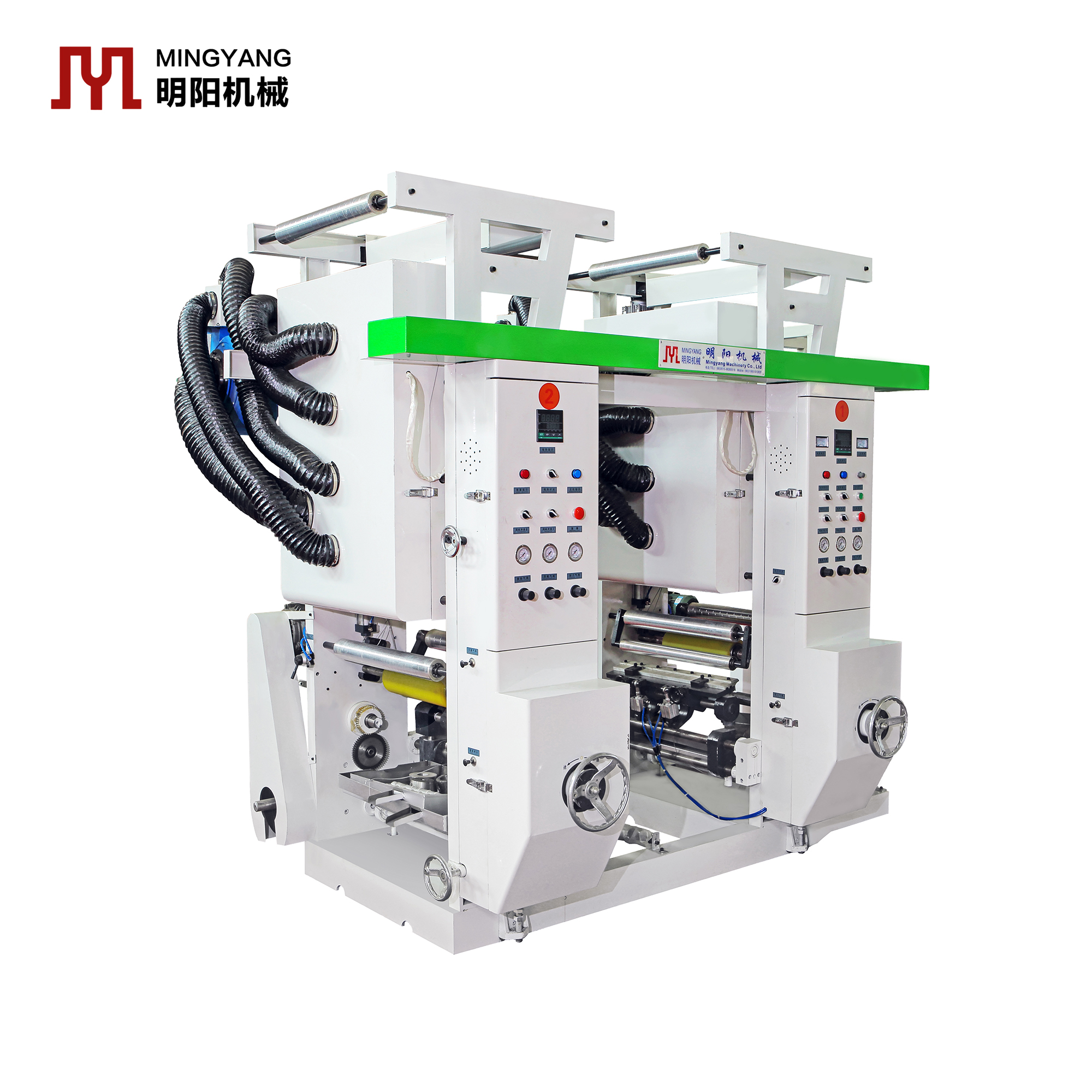
A stack type flexographic printing machine features a vertical arrangement. Color decks stack one above the other. You typically see one to four decks per side. They mount on a single, robust machine frame. The substrate travels vertically through the printing nips. This creates a distinct web path dynamic. The independent framework is highly functional. It allows individual color stations to engage or disengage. You can do this without halting the entire press. This vertical design drastically reduces the machine's horizontal footprint. The web routes up one side of the stack and down the other. This configuration maximizes vertical space utilization within the facility. In tight urban manufacturing plants, this verticality saves thousands of square feet. The heavy cast-iron or thick steel side frames absorb vibration effectively, which helps maintain print quality even when running at high speeds.
Matching the press to the physical properties of the material prevents registration drift, web breaks, and excessive waste. You must analyze the substrate's stretch, thickness, and surface tension. The mechanical path of the press must align with the material's physical limits. Forcing a rigid substrate through tight vertical turns causes damage. Running a highly stretchable film through a long horizontal path causes registration loss. Proper matching ensures consistent print quality and minimizes downtime. We always run tension tests on sample rolls before recommending a specific frame style. Understanding the modulus of elasticity of your primary substrate dictates whether you need the short web path of a stack press or can manage the longer horizontal run of an inline system.
The stack press is historically favored for specific materials. It serves as a robust plastic film printing machine. Manufacturers use it for polyethylene and polypropylene bags. It handles sacks and industrial wraps effectively. However, stack presses have limitations with highly extensible films. Ultra-thin, stretchy films require precise tension control. Central Impression presses handle these ultra-thin materials better. You must maintain realistic performance expectations for tension control on a stack press. They perform exceptionally well on standard gauge films used in flexible packaging printing. The vertical web path supports the material adequately for these standard applications. When printing heavy-duty fertilizer sacks or pet food bags, the stack press handles the gauge variations without dropping registration. The web tension zones are shorter, which prevents the material from necking down or stretching out of shape between colors.
Inline presses hold a distinct advantage for heavy materials. They handle thick, rigid, or multi-layered substrates effortlessly. Examples include paperboard, corrugated liner, and heavy laminates. The straight, horizontal web path is the key reason. It prevents curling, cracking, or delamination. Routing rigid materials through tight turns causes these issues. Vertical stack configurations require these tight turns over idler rollers. The inline design keeps the material flat and stable. This stability maintains print registration on heavy boards. It also prevents the substrate from retaining a curved memory after printing. If you run 12-point board through a stack press, you will fight web curl at the delivery end all day long. Inline keeps it flat, ensuring that downstream die-cutting and folding operations run smoothly without jamming.
Compare the distance between color stations. Inline presses have longer web paths between colors. This requires advanced servo-driven tension control. Automated registration systems maintain tight tolerances. The material stretches slightly over longer horizontal distances. Load cells and tension rollers must communicate constantly with the drive motors. The stack press features a shorter web path between vertical decks. This aids in maintaining registration on standard flexible materials. It does not require overly complex tensioning software. The shorter distance minimizes the opportunity for the web to wander or stretch between nips. We rely on closed-loop tension systems for inline setups to compensate for that extended web travel. You must ensure your dancer rollers are calibrated perfectly to absorb any tension spikes before they reach the printing nip.
The inline layout offers a significant advantage for curing. The horizontal design easily accommodates bulky systems. You can install UV, LED, or Electron Beam curing units between each color station. This makes it ideal for high-end labels and packaging. These applications require instant curing to prevent smudging or offsetting. Stack presses face spatial limitations. They are typically optimized for water-based or solvent-based inks. These inks use hot air drying. The vertical space between decks restricts large inter-station curing units. You must rely on evaporation rather than instant chemical curing on a stack press. If your production demands high-gloss UV coatings, the inline frame provides the necessary physical clearance for the lamp housings and the associated chill rollers needed to manage the heat load.
Achieving two-sided printing on a stack press is mechanically simple. You route the web through the center of the press. This utilizes decks on both sides simultaneously. It is highly efficient for printing the front and back of a bag in one pass. Contrast this with inline presses. They require specialized turn-bar modules to print on the reverse side. Turn-bars add mechanical complexity to the machine. They increase the overall web path length. They also elevate the risk of web wrinkling or scratching the freshly printed surface. We frequently set up stack presses for agricultural film where both sides need distinct branding, and the center-web routing handles it flawlessly without requiring compressed air to float the web over a turn-bar.
Inline presses excel at downstream integration. You can add rotary die-cutters and cold foil units. Slitting stations integrate seamlessly at the end of the press. This creates a complete raw-material-to-finished-product workflow in one pass. Stack presses offer a different integration advantage. A common practice is synchronizing them directly with extrusion equipment. You can connect a stack press directly to a blown film printing line. This allows manufacturers to extrude, treat, and print film continuously. This upstream integration eliminates the need to wind and transport blank film rolls. Running the extruder and press in tandem cuts material handling time in half and reduces the risk of surface contamination before the ink is applied.
Feature/Capability | Inline Flexographic Press | Stack Flexographic Press |
|---|---|---|
Floor Space Requirement | High (Horizontal expansion) | Low (Vertical expansion) |
Best Substrates | Paperboard, Labels, Heavy Laminates | Standard Plastic Films, Woven Sacks |
Drying/Curing Integration | Excellent (Space for UV/LED/EB) | Limited (Best for Hot Air/Solvent) |
Two-Sided Printing | Requires Turn-Bars (Complex) | Natural Web Routing (Simple) |
Converting Integration | High (Die-cutting, foiling inline) | Low (Usually roll-to-roll) |
Assess the hidden operational costs before installation. These relate to facility constraints, daily labor, and quality control. Proper planning mitigates these risks. Failing to account for ceiling height or foundation requirements leads to costly installation delays. Ignoring operator ergonomics results in longer changeover times and increased labor costs. You must evaluate the physical environment where the press will operate. We have seen projects stall for weeks because the concrete slab lacked the depth to anchor a high-speed inline frame properly. Vibration from a poorly anchored press will destroy your print registration and prematurely wear out your plate cylinders.
Calculate the horizontal footprint requirements. An 8-color inline press requires massive floor space. You need room for the unwind, eight horizontal decks, drying tunnels, converting units, and the rewind. An 8-color stack press requires significantly less horizontal room. However, identify ceiling height requirements for stack presses. They need vertical clearance for the upper decks and the overhead drying bridge. They also need structural support necessities. Specialized ventilation needs are critical for heavy stack configurations using solvent inks. Ensure your concrete foundation can support the concentrated weight of a vertical stack frame. You must also map out the utility drops.
Verify compressed air capacity for pneumatic tension controls and doctor blade chambers.
Ensure adequate electrical drops for high-draw UV curing lamps or hot air blowers.
Install proper exhaust ducting to manage VOC emissions from solvent-based inks.
Confirm the concrete slab thickness meets the manufacturer's vibration dampening specifications.
Evaluate the ergonomics of an inline press. Operators can easily access all stations from floor level. This allows for rapid plate changes and ink wash-ups. Web splicing is straightforward. Operators do not need to climb ladders. Address the safety challenges of a stack press. Accessing upper decks requires catwalks or ladders. This impacts efficiency during color changes. Modern automated wash-up systems mitigate this downtime. However, physical access for plate mounting on upper decks remains a manual task requiring vertical movement. We train crews to stage plates and inks on the catwalks before shutting down the press to minimize this vertical transit time. Proper staging shaves minutes off every changeover, which adds up to hours of recovered production time each week.
Integrate 100% inline inspection cameras. Automated defect detection is standard now. Inline presses often have more physical space. You can mount these optical systems directly after the final print station. This allows for immediate detection of registration errors or color variations. Stack presses can also accommodate inspection systems. However, mounting locations are sometimes constrained by the vertical frame and overhead web paths. Ensure your chosen architecture supports the necessary sensor arrays for your quality control standards. You need clear line-of-sight for strobe lights and high-speed cameras to monitor dot gain and trap accurately without interference from the machine frame.
Compare the baseline manufacturing costs of both architectures. Stack presses often represent a lower initial capital expenditure. This applies to basic film printing applications. The mechanical simplicity of the common frame reduces manufacturing costs. Inline presses require higher investment. This is due to modularity, advanced independent servo drives, and integrated converting stations. Balance initial capital expenditure with long-term operational efficiency. Consider waste reduction, changeover speed, and machine lifespan. A higher initial investment in an inline press pays off if you require complex, single-pass converting. You recover the extra capital cost through reduced labor and eliminated secondary processing steps.
Define the critical criteria for selecting a manufacturing partner. Look for the availability of local OEM parts. Remote diagnostic capabilities are essential for troubleshooting software issues quickly. Check their software update frequency and Service Level Agreements. Require live demonstration trials. Use your facility's specific substrates and ink sets. Do this before finalizing procurement. Evaluate the flexographic printing machine supplier for future retrofits. Adding a color station or a die-cutting unit later is important. This is generally easier with inline suppliers due to the modular horizontal layout. We always demand a full-speed test run with our own roll stock before signing off on factory acceptance.
Ship your exact production substrate to the manufacturer's testing facility.
Provide the specific ink formulations you intend to run in daily production.
Execute a full-speed run to verify tension control and registration stability.
Perform a complete color changeover to time the wash-up and setup process.
Test the emergency stop and web break detection systems under load.
Audit current floor space and measure exact ceiling height clearances to determine physical layout constraints.
Calculate required web tension tolerances based on the stretch characteristics of your primary substrates.
Map out specific ink curing requirements to decide between hot air drying and UV/LED systems.
Request detailed substrate testing and layout drawings from shortlisted suppliers using your actual production materials.
A: The primary difference is the physical arrangement of the color stations. Inline presses arrange them horizontally in a row along the floor. Stack presses arrange them vertically on top of one another on a single frame.
A: A stack type flexographic printing machine is typically best for integrating with a blown film extrusion line. Its vertical web path, compact footprint, and ability to easily print on both sides of the extruded tube make it ideal.
A: Yes, but it requires the installation of a turn-bar system. This system flips the substrate between color stations. This adds length and mechanical complexity to the web path compared to a stack press.
A: Stack presses are preferred for basic plastic films because they offer a compact footprint. They handle standard flexible packaging substrates well. They also easily facilitate the reverse printing common in bag and sack manufacturing.
A: Inline presses have ample horizontal space between stations to accommodate large UV, LED, or EB curing units. Stack presses have limited vertical space between decks, making them better suited for hot air drying of water or solvent-based inks.
A: Inline presses are best suited for heavy, rigid, or multi-layered substrates. This includes paperboard, corrugated liners, pressure-sensitive labels, and heavy laminates. The straight web path prevents curling and cracking of these materials.