Views: 0 Author: Site Editor Publish Time: 2026-09-25 Origin: Site
Scaling output in plastic packaging manufacturing forces a choice. You either expand your facility footprint or maximize the output of a single extrusion line. When producing narrow-width films like T-shirt bags or garbage bags, a single die head cannot process the full melt capacity of a large extruder. Forcing it compromises film quality. Splitting the melt stream becomes necessary. Choosing the wrong multi-head configuration leads to uneven film thickness, excessive scrap, and maintenance bottlenecks.
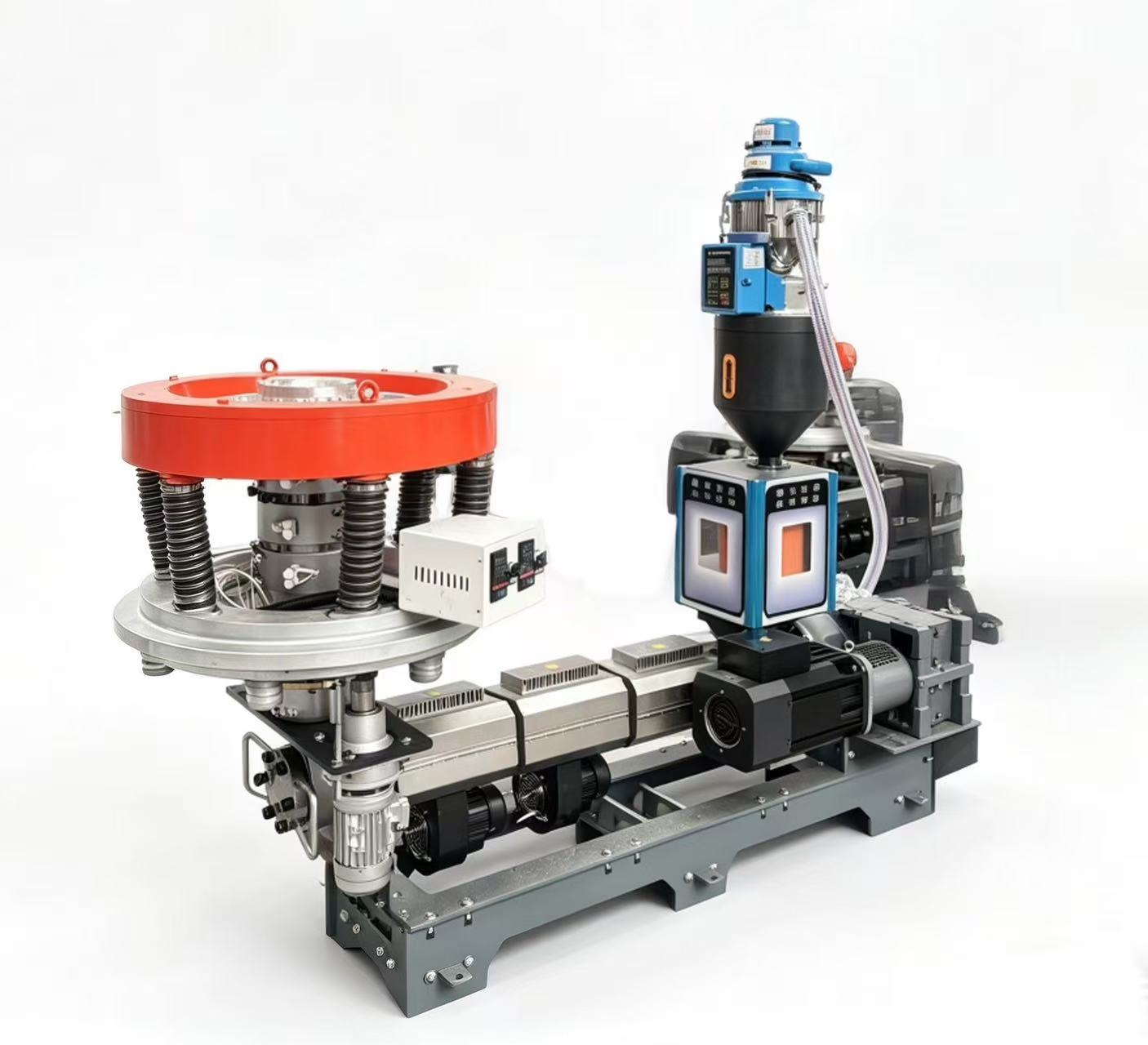
Achieving high production efficiency requires perfect alignment between the extruder, the die head manifold, and the cooling systems. A mismatch here throttles your output, regardless of machine size. This guide provides a technical evaluation of the twin head vs four head film blowing machine. We analyze melt distribution, cooling requirements, production volume thresholds, operational expenditures, and maintenance realities to help you specify the correct machinery for your plant.
Output vs. Width Trade-off: Multi-head machines maximize extruder capacity for narrow films; twin-heads offer a balance of width flexibility and volume, while four-heads are strictly for ultra-high-volume, narrow-width production.
Melt Distribution Complexity: Moving from two to four die heads exponentially increases the difficulty of maintaining uniform melt pressure and temperature, requiring highly skilled operators.
Cooling System Demands: Both configurations reduce the floor space and power consumption per kilogram of film compared to running multiple single-head machines, but multi-head setups—especially four-head—require highly specialized, high-capacity cooling infrastructure to maintain bubble stability.
Running a large extruder into a single small die head creates excessive backpressure. The polymer melt is forced through a restrictive opening at high velocity. This mismatch causes severe melt fracture, often referred to as sharkskin on the factory floor. The surface of the film becomes rough, and mechanical properties degrade significantly. Furthermore, cooling limitations become a hard bottleneck. The polymer exits the die too fast for standard air rings to cool the bubble effectively. The frost line rises too high, causing bubble instability, breathing, and severe gauge variations.
Splitting the polymer melt from one extruder into multiple die heads solves this fundamental problem. It allows manufacturers to utilize high-capacity extruders for narrow-width PE film blowing machine applications. You get the high throughput of a large screw without overwhelming a small die gap. The melt stream is divided through a specialized manifold. Each die receives a manageable volume of polymer, reducing the shear rate at the die lip and preventing surface defects.
Multi-head success relies entirely on balancing extruder output with manifold distribution. The system needs independent, precision-machined air rings for each die. A flawless setup requires equal flow paths. If one path is longer or has higher resistance, the polymer will degrade or flow unevenly due to changes in residence time. Baseline success criteria include consistent gauge across all bubbles. You need stable bubble geometry under continuous operation. Manageable die tuning is critical for operators to maintain tolerances. Finally, synchronized haul-off speeds ensure uniform roll tension across all winding stations.
Configuration | Melt Pressure Management | Cooling Efficiency | Ideal Application |
|---|---|---|---|
Single Head (Small Die) | Poor (High backpressure) | Low (Frost line too high) | Low-output specialty runs |
Twin Head | Excellent (Balanced flow) | High (Isolated air rings) | Medium to narrow retail bags |
Four Head | Complex (Requires precision manifold) | Moderate (Risk of air interference) | Ultra-narrow, high-volume bags |
Typical extruder screw diameters for this setup range from 55mm to 75mm. Standard die sizes accommodate medium to narrow film widths per head, usually between 200mm and 600mm. Common L/D (Length/Diameter) ratios sit around 28:1 or 30:1. These ratios are optimized for twin-head flow, ensuring proper melt homogenization and consistent viscosity before the polymer reaches the splitting manifold. The barrel heating zones must maintain a precise temperature profile to prevent premature degradation before the split.
A twin head film blowing machine balances melt stability and output perfectly for HDPE LDPE film production. Tuning two die lips for uniform micron thickness remains relatively simple for an experienced operator. You adjust the die centering bolts on each head independently. This configuration handles a versatile product mix. You can produce shopping bags, standard garbage bags, and agricultural mulch films on the same line. The changeover times are reasonable, allowing facilities to adapt to shifting production schedules without losing entire shifts to recalibration.
Manufacturers typically utilize these machines for mono-layer or simple ABA co-extrusion structures. Integrating dual high-efficiency air rings is straightforward. The bubbles remain far enough apart to prevent aerodynamic interference. The ambient air drawn by one blower does not disrupt the cooling of the adjacent bubble, maintaining a stable frost line height on both webs. You can adjust the blower VFDs independently to fine-tune the cooling for each bubble.
Physical limits of bubble cooling emerge when two heads sit in close proximity. You must manage ambient drafts in your facility carefully. Floor space requirements increase for dual take-up units and winders compared to a single line. Winding tension control requires independent drives. Even slight gauge variations between the two bubbles will cause different roll diameters over time, necessitating precise tension feedback loops on the surface winders.
Verify extruder barrel temperatures are stable before opening the manifold valves.
Adjust the primary die centering bolts on head A to achieve baseline gauge.
Repeat the centering process on head B, monitoring the melt pressure transducer.
Fine-tune the dual-lip air rings to lock in the frost line height for both webs.
Synchronize the nip roller speeds to ensure equal tension across both winding stations.
This setup demands a high-capacity extruder, typically 75mm or larger, to feed four heads adequately. Die size and maximum film width face strict physical limitations. Production is usually restricted to very narrow films, typically under 250mm per head. You are looking at small T-shirt bags, continuous tubing, or specialized packaging sleeves. The physical space required to mount four dies side-by-side dictates these narrow limits. You cannot physically fit larger air rings next to each other without them colliding.
The theoretical output multiplier is massive for high volume blown film production. You produce four rolls of narrow film simultaneously from a single hopper. This machine excels in high-volume, low-margin applications. Think of supermarket produce bags or small retail checkout bags where sheer throughput dictates profitability. When running continuously on a single SKU, the output per square meter of factory floor is unmatched. You maximize the output of the main drive motor and barrel heaters.
Designing a manifold that delivers equal pressure and temperature to four separate dies presents a massive engineering challenge. The flow channels must be perfectly symmetrical. A four-head manifold needs highly precise PID temperature controllers. If one zone is off by a few degrees, the viscosity of the polymer changes. This alters the flow rate to that specific die, causing one bubble to be thicker and faster than the rest. Any deviation causes dead spots where polymer degrades, burns, and eventually breaks loose as black specks in the film.
The cooling infrastructure requires massive ambient air movement or specialized chillers. Internal Bubble Cooling (IBC) is rarely feasible on such small die diameters. Operators face the heavy burden of simultaneously managing four bubbles. Tuning four die gaps and threading four winders during startup or a web break demands high skill and immense patience. A single mistake on one bubble can disrupt the entire line, leading to cascading failures across all four winding stations.
Product catalogs dictate the machinery choice heavily. Four-head machines operate rigidly. They are dedicated to one specific narrow product in massive volumes. You do not buy a four-head machine to change bag sizes every shift. The downtime required to adjust four dies, clean four spiral mandrels, and thread four webs destroys any efficiency gained. Twin-heads allow for a wider variety of bag sizes. They facilitate faster changeovers and accommodate shifting market demands with much less downtime. You can swap out a die lip on a twin-head setup in a fraction of the time.
Rheological challenges multiply with more heads. A twin-head configuration maintains consistent gauge with standard manifold designs. The pressure drop from the extruder screen pack to the die lips is manageable. Four-head machines remain highly susceptible to dead spots. Polymer degradation and uneven gauge across the four bubbles occur frequently without meticulous tuning. Scrap rates during startup are inherently higher because you are stabilizing four separate webs simultaneously. Until all four bubbles reach the correct frost line height and gauge, the material produced goes straight to the grinder.
Multi-head machines are predominantly mono-layer. Routing multi-layer melt streams into two or four heads is prohibitively complex. The manifold costs become astronomical, and the risk of layer instability is too high. Maintaining uniform layer distribution across four separate dies requires precision machining that pushes the limits of current manufacturing technology. If your production requires complex multi-layer barrier films, multiple single-head machines remain the industry standard. Attempting co-extrusion on a four-head block usually results in severe layer curling and delamination.
One four head film blowing machine takes up less space than two twin-head machines. It consumes fewer kilowatts per kilogram of film produced on paper because you only heat one large barrel and drive one main motor. However, you must account for the hidden energy costs. High-capacity blowers required to cool four adjacent bubbles draw significant power. Maintenance costs are also higher due to the complex manifold cleaning requirements. Purging a four-head manifold takes longer, wastes more resin, and requires expensive purging compounds to clear out degraded material from the outer channels.
The human element plays a critical role in overall efficiency. A web break on a four-head machine often requires slowing or stopping the entire line. This causes scrap on all four winders simultaneously while the operator fixes one bubble. The cognitive load on the operator is immense. Twin-heads isolate issues more effectively. They are generally easier to operate and recover faster from minor disruptions. A single operator can comfortably manage a twin-head line, whereas a four-head line often requires two operators during startup and screen changes.
Evaluate your current bottleneck carefully. Determine if you lack extruder capacity, floor space, cooling capacity, or operator availability. Analyze the target film width and micron thickness. If your required film width exceeds the physical limits of a four-die manifold, a four-head setup is simply not viable. Measure your ceiling height as well. Multi-head lines often require specific haul-off geometries to ensure the bubbles have enough time to cool before reaching the nip rollers. Insufficient cooling height will cause the film to block or stick together on the roll, ruining the entire batch.
Compare the initial capital expenditure of the manifold, dies, specialized cooling rings, and multi-station winders. Analyze the ongoing operational costs. Factor in resin waste during startup sequences, which is significantly higher on four-head systems. Calculate maintenance hours for die cleaning and overall energy usage per shift. Do not just look at the sticker price of the machine; evaluate the cost of running it daily. High scrap rates on a four-head machine running poorly will quickly erase any theoretical throughput advantages. Factor in the cost of replacement heater bands and thermocouples for the complex manifolds.
Ask your film blowing machine manufacturer specific technical questions. Request flow simulation data for their four-head manifold to prove equal distribution. Inquire about the CNC tolerances used for the die spirals. Ask how their air ring design prevents aerodynamic interference between adjacent bubbles. Demand a rigorous factory acceptance test specifically for multi-head gauge consistency and cooling stability before shipping. Verify that the tension control systems on the winders operate independently for each web. Check the quality of the brass scrapers and maintenance tools provided with the machine.
Multi-head extrusion remains essential for narrow-web efficiency. However, more heads do not automatically equal better returns. Choose a twin head configuration for a balanced, versatile approach to production. It offers manageable maintenance, easier operation, and high reliability across various product sizes. Choose a four head configuration only if you have a dedicated, continuous contract for ultra-narrow, high-volume production and possess a highly skilled maintenance team.
Audit your product mix by width and volume to determine if dedicated narrow-web production is justified.
Calculate your available floor space and ambient cooling capacity to ensure multi-head systems will not overheat your facility.
Request specific manifold engineering data and flow simulations from your shortlisted machinery partners.
Evaluate your current operator skill levels and determine if additional training is required for multi-head management.
A: A twin head machine significantly reduces floor space requirements. It lowers total power consumption by utilizing one main extruder motor and heating zones instead of two. It also centralizes material feeding, streamlining the resin handling process for operators and reducing the number of hoppers that need monitoring.
A: Yes, it is possible. However, the manifold and die design must be specifically optimized for the polymer's rheology. HDPE is much more common for these narrow-width applications due to its melt strength and typical use in thin grocery bags. LDPE requires different die gap clearances.
A: While ABA twin-head machines exist, multi-head setups overwhelmingly produce mono-layer films. Splitting multi-layer melt streams into several dies introduces extreme engineering complexity and cost, making single-head co-extrusion lines far more practical for multi-layer barrier needs.
A: IBC is highly effective for large single-head machines but rarely implemented on four-head machines due to very small die diameters. Twin-heads can sometimes accommodate IBC if the die size is large enough, but advanced dual-lip external air rings remain the standard for cooling.
A: The system relies on a highly complex manifold. This manifold splits the polymer melt four ways through precisely engineered flow channels. It must maintain equal pressure, temperature, and residence time for each path to prevent material degradation and ensure uniform film gauge across all dies.
A: Yes. Managing four separate die gaps simultaneously requires significant operator skill. Any slight variation in manifold temperature or ambient air currents can cause gauge fluctuations across the four bubbles, making it much harder to control than a single or twin head setup.