
Views: 0 Author: Site Editor Publish Time: 2026-01-26 Origin: Site
Understanding the process, components, and maintenance of a blown film machine is essential for optimizing film production, reducing costs, and ensuring high-quality output. A blown film machine is a crucial piece of equipment used to produce various types of plastic films for industries such as packaging, agriculture, and industrial applications. With more than 20 years of experience, Mingyang Packaging Machinery offers high-performance blown film machines designed to deliver stable performance, exceptional film quality, and efficiency. In this article, we will walk through the step-by-step process of how a blown film machine works, the key components, and maintenance tips to ensure that your production line runs smoothly.
The blown film extrusion process involves multiple stages, each of which plays a crucial role in producing high-quality films. Below is a detailed breakdown of the process:
The first step in the blown film machine process begins with feeding plastic pellets, such as polyethylene (LDPE or HDPE), into the extruder. The extruder is equipped with a rotating screw that helps to push the plastic pellets forward while applying heat to melt them into a liquid form. The screw continuously moves the material through the barrel while gradually melting it, ensuring a consistent and even material flow.
Once the material is fully melted, it becomes molten plastic, ready to be shaped and formed into a film. The extruder is designed to maintain the optimal temperature, ensuring that the plastic reaches its melting point without degrading, which is essential for maintaining the strength and consistency of the final film.
The molten plastic is then forced through the die, a circular opening at the end of the extruder, to form a tube-like shape. This die determines the film's initial thickness and width. Once the plastic material exits the die, it is immediately inflated using an air ring to create a bubble of film.
This inflation step is critical as it helps achieve the desired thickness and uniformity of the film. The size of the bubble is controlled by adjusting the air pressure, which also affects the film's final mechanical properties, such as strength and flexibility. The inflated film bubble can expand and stretch as it moves upward, allowing for precise control of film thickness, strength, and clarity.
After the film bubble has been inflated, it moves through a series of cooling systems, such as air or water-cooled rollers, to solidify the film. Cooling is essential to ensure that the film retains its shape and thickness once it has been inflated.
The film is then collapsed and guided into a winder, where it is carefully rolled onto a large spool. This winding step is important for collecting the finished film and preparing it for storage or further processing.
A blown film machine consists of several key components, each playing a vital role in the production process. These components work together to ensure that the film produced is of high quality and consistent in terms of thickness and mechanical properties.
The extruder is the heart of the blown film machine, responsible for melting and moving the plastic material. The screw inside the extruder performs the critical function of pushing the plastic through the system while ensuring that it is melted evenly. The extruder also plays a key role in controlling the flow rate and temperature of the molten plastic, which ultimately affects the film's properties.
The die head is the component through which the molten plastic exits the extruder, forming a tube of film. The air ring surrounds the die head and inflates the molten tube of plastic to form the bubble. The air pressure inside the ring can be adjusted to control the film's thickness and strength, making the die head and air ring crucial for producing films with the desired properties.
The cooling system is responsible for solidifying the molten plastic after it has been inflated. Cooling is essential to ensure that the film retains its shape and thickness. Typically, air-cooled and water-cooled rollers are used in this stage to lower the temperature of the film gradually.
After cooling, the film passes through nip rollers, which help flatten the film and prepare it for winding. The winder then collects the finished film, winding it onto large rolls. The nip rollers and winder work together to ensure that the film is wound evenly, preventing wrinkles and ensuring consistent roll tension.
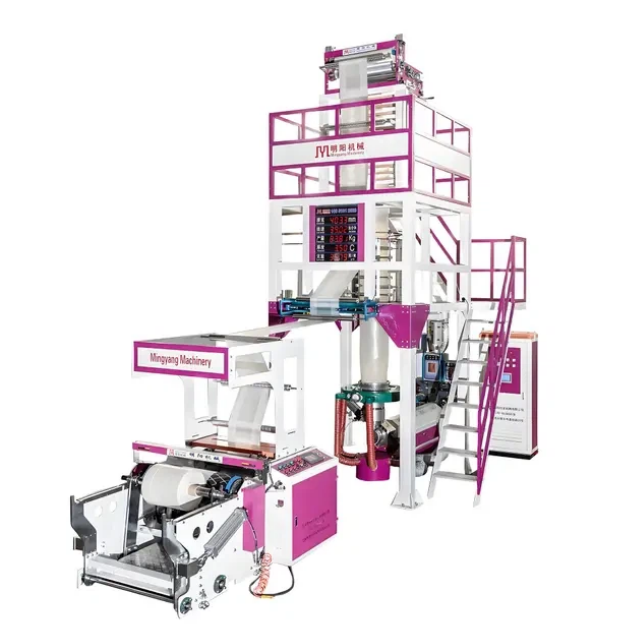
To ensure that the blown film machine operates efficiently and produces high-quality films, several key control parameters must be monitored and adjusted during production.
Temperature
Temperature is one of the most critical factors in blown film extrusion. The extruder, die, and cooling system must all maintain the correct temperatures to prevent the plastic from overheating or underheating. Too much heat can degrade the plastic, while too little heat can cause clogging or inconsistent film production. Therefore, maintaining precise temperature control is essential for producing films with optimal properties.
Screw Speed
The screw speed in the extruder controls how quickly the plastic is pushed through the system. Faster speeds result in higher production rates, while slower speeds allow for better control over the extrusion process. The screw speed must be carefully adjusted to maintain the desired melt flow and film quality.
Air Pressure
The air pressure inside the air ring is another critical factor in film production. Air pressure controls the size of the film bubble and, consequently, the thickness and properties of the final film. Proper air pressure ensures uniformity in film thickness and prevents defects such as film breaks or weak spots.
Proper maintenance of the blown film machine is essential to ensure smooth operation and prolong the lifespan of the equipment. Regular maintenance also helps to prevent downtime and reduce the risk of costly repairs. Here are some key maintenance tips:
Heating & Screw System Care
The heating system and screw inside the extruder should be cleaned regularly to prevent material buildup and ensure efficient heat transfer. Lubricating the screw and checking for wear and tear are also important to maintain smooth operation.
Cooling System Upkeep
The cooling system should be regularly inspected to ensure that the cooling rollers and air or water sprays are functioning properly. Clean any debris or buildup from the cooling system to ensure that it operates efficiently and prevents uneven cooling, which could lead to inconsistent film quality.
Die Cleaning & Calibration
The die should be cleaned and calibrated periodically to prevent blockages and ensure the proper flow of molten plastic. Calibration ensures that the die produces the correct thickness of film and that the extrusion process remains consistent.
Issue | Possible Cause | Solution |
Film thickness inconsistent | Air pressure fluctuation | Adjust air ring |
Melt film break | Screw wear | Replace screw/barrel |
Poor film clarity | Temperature instability | Recalibrate control |
In conclusion, understanding how a blown film machine works, from the material feeding to the winding process, is essential for achieving consistent, high-quality film production. Proper maintenance of key components like the extruder, die, cooling system, and air ring is also crucial for ensuring efficient operation and long-term performance. By focusing on these aspects, manufacturers can reduce downtime, improve film quality, and ultimately enhance the profitability of their production lines. If you are looking for a high-quality blown film machine that combines efficiency, reliability, and energy savings, Mingyang Packaging Machinery offers the perfect solution.
For more information or to get started with your next project, contact us today.
What is the purpose of the extruder in a blown film machine?
The extruder is responsible for melting and moving the plastic pellets through the system, ensuring that the material is evenly melted and ready to be extruded through the die.
How is the film thickness controlled in the blown film extrusion process?
Film thickness is controlled by adjusting the air pressure in the air ring, which inflates the molten plastic tube. The size of the film bubble determines the thickness of the final film.
Why is temperature control important in blown film extrusion?
Temperature control is crucial to prevent the plastic from overheating or underheating. Proper temperature management ensures that the film maintains its strength and consistency.
How often should a blown film machine be cleaned and maintained?
Regular cleaning and maintenance should be done at least once every few weeks, depending on the production volume. Key areas to focus on include the extruder, die, cooling system, and screw.


