
Views: 0 Author: Site Editor Publish Time: 2026-02-09 Origin: Site
When choosing the right blown film machine for your production line, one of the most important decisions you’ll face is whether to use a HDPE or LDPE blown film machine. Both types of machines have their distinct advantages, and selecting the appropriate one depends on the specific needs of your production, such as output requirements, material characteristics, and desired film properties. In this article, we will explore the key differences between HDPE and LDPE blown film machines, discuss how to match the machine to your production goals, and highlight the advantages of Mingyang Packaging Machinery's high-performance solutions.
HDPE blown film machines are designed to produce films with enhanced mechanical properties such as high strength and excellent stretchability. These machines use higher air pressure during the film extrusion process, which leads to greater film thickness, strength, and durability. The increased pressure during the extrusion process ensures that the material is pushed through the die more effectively, resulting in films that can handle more demanding applications.
These machines are typically used in applications requiring heavy-duty films, such as industrial packaging, agricultural films, and stretch films. The high pressure allows for precise control over film thickness and uniformity, which is critical for industries that require consistent quality and performance.
On the other hand, LDPE blown film machines use lower air pressure during the extrusion process. These machines are generally used for producing thinner, lighter films that do not require the high strength and durability of their HDPE counterparts. The low pressure leads to a gentler extrusion process, resulting in films that are more flexible and cost-effective but typically weaker in terms of mechanical strength.
LDPE blown film machines are ideal for applications where flexibility, transparency, and cost efficiency are more important than strength, such as food packaging and consumer goods packaging. These machines are also well-suited for applications requiring less demanding mechanical properties.
When selecting between HDPE and LDPE blown film machines, it is essential to consider your specific production needs and how each machine's capabilities align with those requirements.
If your production line requires high-volume output and the ability to produce a large amount of film in a short period, HDPE blown film machines may be the better choice. These machines are designed to operate at higher speeds and produce films more quickly, making them ideal for high-demand environments. Conversely, if your production volume is lower and you need to focus on flexibility and cost-efficiency, LDPE machines may be the better option. They are more energy-efficient and less costly to operate, making them suitable for smaller-scale operations.
The quality of film plasticization is a critical factor in determining the film's performance. HDPE machines provide excellent plasticization, ensuring that the film has a smooth, consistent surface and the desired mechanical properties. This is essential for applications that require films with a high degree of strength and durability, such as protective packaging and stretch films.
In contrast, LDPE machines offer standard plasticization quality, which may be sufficient for applications where film strength is not the primary concern. These machines are ideal for producing thinner films for consumer packaging, but may not provide the same level of performance when it comes to strength and barrier properties.
HDPE blown film machines tend to consume more power due to the increased air pressure and higher operating speeds. However, they typically have a longer lifespan due to their robust design and ability to withstand higher pressure and demand. These machines are built for heavy-duty production and are ideal for businesses that require continuous, high-output operations.
LDPE machines, while more energy-efficient and less costly to operate, generally have a shorter lifespan when compared to HDPE models. However, for businesses that do not require as much film output or production intensity, these machines provide a cost-effective solution.
Feature | HDPE | LDPE |
Output | High | Medium |
Plasticization | Excellent | Standard |
Power Usage | Efficient | Lower |
Machine Lifespan | Longer | Standard |
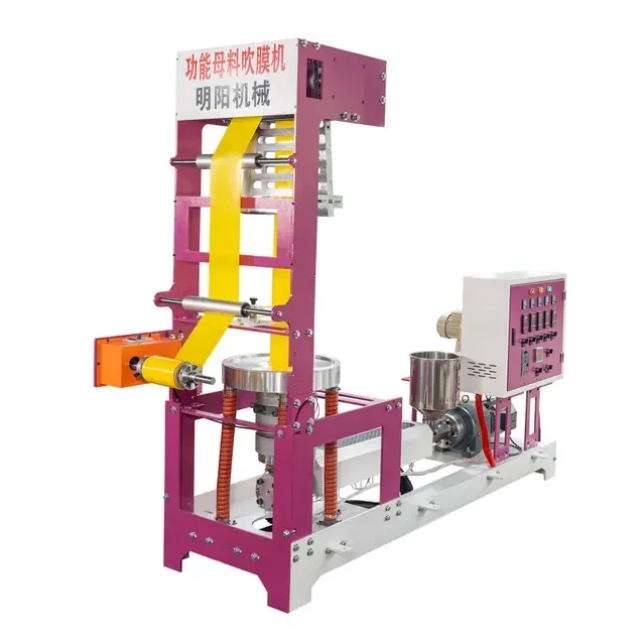
Mingyang's blown film machines are designed to maximize efficiency and reduce operational costs. Here are some of the key features that set our machines apart:
One of the standout features of Mingyang Packaging Machinery’s HDPE blown film machines is their energy-saving design. These machines are equipped with high-speed screws and ceramic heating systems, which significantly reduce energy consumption. The use of ceramic heaters ensures that the heat is efficiently transferred to the plastic, leading to better plasticization and less energy waste.
The high-speed screws help increase the throughput of the machine, allowing for faster production speeds without compromising on quality. This combination of energy-efficient technology and high-speed operation helps businesses reduce their production costs and increase profitability.
Mingyang’s blown film machines are built for durability and stability. The robust construction of our HDPE machines ensures they can handle continuous production without frequent breakdowns. This reliability reduces the need for frequent maintenance and minimizes the risk of unexpected downtime, allowing businesses to maintain a smooth and uninterrupted production process.
The HDPE blown film machines are designed to provide long-term, stable performance. The use of high-quality materials and precision engineering ensures that our machines operate efficiently over time, providing consistent results with minimal maintenance. The machines are also designed to withstand the demands of high-pressure operations, ensuring long-lasting durability.
Choosing between HDPE and LDPE blown film machines ultimately depends on the specific product requirements and production goals of your business.
If your production requires films with high strength and thickness, such as those used in industrial packaging or agricultural films, a HDPE blown film machine is the better choice. These machines can produce films with enhanced mechanical properties, such as puncture resistance and tensile strength, making them ideal for heavy-duty applications.
If, however, you need films that are lighter, thinner, and more flexible, such as for consumer goods packaging, a LDPE blown film machine may be more appropriate. These machines can produce films that are ideal for applications that require flexibility, transparency, and cost-efficiency.
For businesses with high production volume goals, HDPE blown film machines are designed to handle high-speed operations and produce large quantities of film in a short period. If your business operates on a smaller scale or requires lower production volumes, a LDPE blown film machine offers a cost-effective solution with lower energy consumption and less intensive production requirements.
In conclusion, selecting the right blown film machine — whether HDPE or LDPE — depends on your specific production needs, including the required film properties, production volume, and cost considerations. Mingyang Packaging Machinery offers high-performance machines that cater to both HDPE and LDPE requirements, ensuring that your production process is efficient, cost-effective, and produces high-quality films. Whether you are producing heavy-duty industrial films or lightweight consumer packaging, Mingyang provides the perfect solution for your needs.
If you are interested in learning more about Mingyang's blown film machines or would like to discuss your production requirements, contact us today to explore how Mingyang Packaging Machinery can help streamline your operations.
What is the difference between HDPE and LDPE blown film machines?
HDPE blown film machines produce stronger, thicker films and are ideal for heavy-duty applications, while LDPE machines produce thinner, more flexible films suitable for lighter packaging applications.
How does the energy consumption of HDPE and LDPE machines compare?
HDPE machines are more energy-efficient than LDPE machines due to their advanced heating systems and high-speed operation, while LDPE machines consume less power overall.
Can blown film machines produce different types of films for various applications?
Yes, blown film machines can produce films with a wide range of properties, from heavy-duty industrial films to lightweight, flexible packaging films, depending on the material and process parameters.
What are the key advantages of Mingyang's blown film machines?
Mingyang's blown film machines are known for their energy efficiency, high-speed operation, durability, and minimal after-sales issues, making them a reliable and cost-effective solution for your film production needs.


